
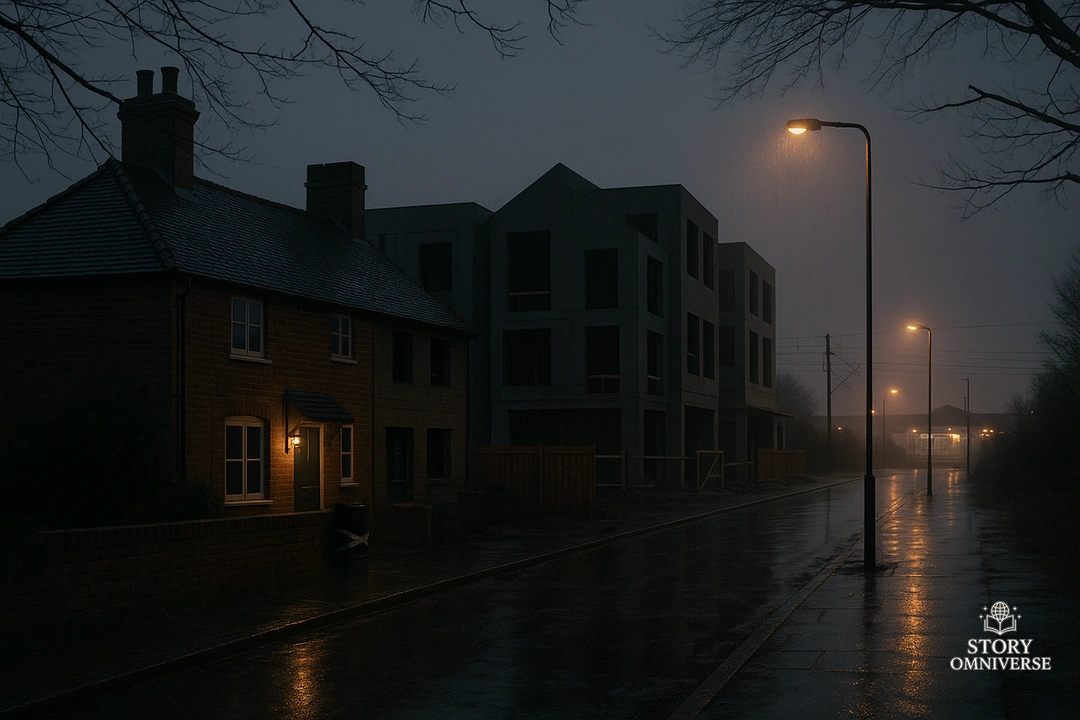
Chapter 1: The Complaint Nobody Wanted
Dalen Rusk smelled like rain and old aftershave. He stood in the Hollowbrook precinct lobby with a manila folder clutched to his chest like a shield. The desk sergeant glanced at the papers, then at Rusk’s shaking hands.
“Retired, huh?” the sergeant said. “You sure this isn’t just someone messing with you online?”
Rusk’s jaw tightened. “It’s not online. It’s my mailbox. My windows. My phone. Someone’s been around my house.”
Mira Lorne stepped in from the corridor, SCU badge clipped to her coat, eyes already scanning the folder. She caught the last line and the way Rusk’s gaze kept flicking to the glass doors as if expecting someone to appear behind them.
“Let’s see what you’ve got,” Mira said.
Rusk opened the folder. Printed screenshots spilled out, each with a timestamp. A message thread full of short sentences that read like someone standing just behind his shoulder.
I remember what you did with the Rivercoil file.
You never liked paperwork, Dalen.
Check your back window.
Mira’s thumb paused on that last line. “Rivercoil,” she repeated. “That’s not a street in Hollowbrook.”
“It’s not a street,” Rusk said. “It’s an old case nickname. Only police used it.”
The sergeant’s eyebrows rose, interest finally replacing dismissal. Mira looked down the hall toward the SCU office. “Yara,” she called.
Yara Novik appeared, tall and composed, her hair pulled tight as if it helped hold the town together. She took one look at the screenshots and the tremor in Rusk’s fingers.
“Jurisdiction?” the sergeant asked, cautious now.
Mira answered before Yara could. “Harassment with credible threat and possible insider knowledge. We pull it.”
Rusk exhaled like he had been holding his breath for days. “Thank you. I tried local patrol twice. They told me to change my number.”
Yara’s voice stayed level. “We start with evidence. Mr. Rusk, we need your phone. We image it, not browse it. Chain of custody. You’ll get it back.”
Rusk hesitated, then handed it over. “He knows my routines,” he said. “He knows when I’m alone.”
“Then we don’t let him keep that advantage,” Mira replied.
Yara turned to Elias Vann as he entered with a field kit slung over one shoulder. “Phone imaging, now. Mira, take a statement. Then we canvas the street. Perimeter first, doors second. If someone’s watching his house, they left something behind.”
Outside, Hollowbrook’s afternoon traffic hissed on wet pavement. Commuters moved toward the rail station, collars up, faces tired but alert. The town felt in-between, like it had not decided whether it belonged to the city or the woods.
Mira followed Rusk toward the interview room. “Start from the first message,” she said. “And don’t minimize anything. Not for me. Not for yourself.”
Rusk swallowed. “The first one said, ‘You should’ve stayed retired.’”
Chapter 2: A Pattern in the Commute Town
Rusk’s house sat on a narrow street of renovated cottages and half-finished new builds. Fresh lumber leaned against older stone. Wind chimes rang from one porch, and a security sign faded on another.
Mira crouched beneath the back window while Yara held a light angled low across the sill. The beam caught smudged scuffs in a thin line of garden soil.
“Boot,” Mira said. “Recent.”
Elias set a ruler beside the mark and photographed it. “Partial tread. Not enough for a full match, but we can compare if we get a suspect shoe.”
Yara’s gloved fingers hovered over the sill. “Don’t touch the paint,” she warned, then lifted a strip of tape and pressed it down with careful pressure. She peeled it back, sealing it onto a card. “Partial print. Better than nothing.”
At the mailbox, Mira found the torn note wedged behind a stack of circulars. The paper had been ripped as if someone changed their mind mid-delivery. Only a corner remained, but the handwriting was sharp, deliberate.
…Rivercoil…
Mira felt her stomach tighten. “Same nickname,” she said, showing Yara.
Yara’s eyes narrowed. “So the sender knows police language. Or wants us to think they do.”
Inside, Rusk sat rigid at his kitchen table, watching them through the glass door like he couldn’t trust the house to hold. Mira pulled a chair opposite him.
“Tell me about Rivercoil,” she said.
Rusk’s mouth twitched. “You’re SCU. You know how it goes. Cases get names that stick. Rivercoil was a theft ring. Evidence went missing. It got… messy.”
“Messy how?” Mira asked.
He stared at the tabletop. “A defendant walked. Not because the case was weak. Because the chain broke. A bag disappeared for a day and came back sealed like nothing happened. After that, the file got buried.”
“Buried by who?” Mira asked.
Rusk’s hand tightened around his mug. “I filed a complaint once. Internal Affairs. It didn’t make me popular.”
Mira leaned in. “Against who?”
Rusk’s jaw worked. “I’m not naming names without a lawyer. Not again.”
Elias stepped in from the hall, phone case in hand. “We’ve got the harassment timestamps,” he said. “They cluster around weekday mornings and evenings.”
“Commuter hours,” Yara said.
Elias nodded. “I can cross-reference with Hollowbrook rail schedules. It might match a specific train. Or someone who wants it to look like a commuter.”
Rusk’s eyes lifted, wary. “You think it’s someone from the city.”
“I think it’s someone who likes you thinking that,” Mira said. “But yes, it’s possible.”
Yara walked to the back door and examined the lock. “Any sign of forced entry?”
“No,” Rusk said quickly. “Nothing taken.”
“Stalking often isn’t about taking,” Yara replied. “It’s about control.”
Mira watched Rusk’s throat bob. “Who else knows your old cases?” she asked.
“Half the department,” he said, then softened. “And my family. They heard enough over the years.”
Elias’s gaze flicked up. “Family access to your phone?”
“No,” Rusk said, too fast. “I don’t hand it around.”
Mira noted the speed of the denial. “When did the messages start?”
“Two weeks ago,” Rusk said. “Right after I went to Greyhaven for coffee with an old contact.”
Yara’s tone sharpened. “Which contact?”
Rusk’s eyes slid away. “Just someone from the station. A desk guy. Retired.”
Mira held the silence until it pressed. “Dalen, if you’re holding back, you’re giving the stalker room to move.”
He looked at her then, fear and pride tangled together. “I’m trying to keep my family out of it,” he said. “They didn’t sign up for my old mistakes.”
Outside, a commuter train horn sounded, long and distant, like a reminder that Hollowbrook was never fully quiet.
Chapter 3: Family Walls
Lenna Rusk arrived like a storm front. She pushed through the front door without knocking, cheeks flushed from the cold, hair pulled into a tight braid that made her look more like her father than she probably wanted.
“What is this?” she demanded, eyes snapping to the evidence bags on the counter. “Dad, you said it was handled.”
Rusk stood, shoulders tense. “Lenna, it’s fine. They’re just checking things.”
Mira held her hands open, calm. “Ms. Rusk, we’re investigating credible threats. We need cooperation.”
Lenna’s gaze landed on Elias, who had Rusk’s phone connected to a small extraction device at the dining table. Her expression changed, sharper, more urgent.
“Give me that,” she said, stepping forward.
Elias lifted a palm. “Ma’am, no. This is evidence.”
“It’s his phone,” Lenna snapped. “You can’t just take it.”
Yara moved between them with a quiet firmness that made the room feel smaller. “We can with consent,” she said, and looked to Rusk. “Mr. Rusk, confirm you consent to imaging.”
Rusk swallowed, eyes darting between daughter and detectives. “I consent,” he said, voice thin but steady.
Yara slid a form from her folder and placed it on the table. “Sign. Now.”
Lenna reached for the phone anyway. Her fingers brushed the edge, and Elias shifted the device away. The movement was small, but it carried a warning.
“Stop,” Mira said, voice low. “Why are you trying to interfere?”
“I’m not,” Lenna said too quickly. “I’m trying to protect him. This neighborhood talks. You show up with SCU jackets and suddenly everyone thinks my father is losing it.”
Rusk flinched at that.
Mira’s eyes stayed on Lenna. “Who else has access to this house?” she asked. “Keys. Codes. Spare lockbox.”
Lenna’s mouth tightened. “Me. My husband. Mom sometimes, when she checks on him.”
“Your mother,” Mira repeated. “Maura Rusk?”
Lenna nodded, then glanced at her father as if measuring how much she was allowed to say. “She helps with groceries. Dad forgets to eat.”
Rusk’s face hardened. “I don’t forget.”
Yara made a note. “Ms. Rusk, I’m documenting your attempt to interfere with evidence collection.”
Lenna’s eyes flashed. “Document whatever you want. Just don’t dig up his past. He’s retired. He earned quiet.”
Mira stepped closer, lowering her voice so it felt personal rather than public. “Lenna, your father came here because he’s scared. Not of gossip. Of a person who knows his old cases. If you’re afraid of our questions, that’s not about neighborhood talk.”
Lenna’s breath hitched. For a moment, her anger slipped and something else showed through. Fear, yes, but also calculation.
“You don’t understand,” she said, softer. “People in Greyhaven don’t let things go. If you start pulling threads, they’ll come for all of us.”
Elias spoke without looking up from his work. “The safest way to stop a stalker is to understand them. Deleting messages helps the stalker.”
Lenna’s jaw clenched again. “I didn’t delete anything.”
Mira watched her hands. They were trembling, but not like her father’s. Her tremor looked like restraint.
Yara capped her pen. “We’ll be in touch,” she said. “For now, no one touches the phone. No one cleans anything. No one throws away notes.”
Lenna stared at the consent form as if it were a betrayal. Rusk signed anyway, his pen scratching loud in the quiet kitchen.
When Mira walked Lenna toward the door, Lenna leaned in and whispered, “If you make this about his IA complaint, you’ll ruin him.”
Mira held her gaze. “If we ignore it, someone might have already decided he’s disposable.”
Lenna’s face went pale, and she left without another word.
Chapter 4: The Night the Threats Turn Physical
They kept surveillance low-profile. No marked cars, no obvious uniforms. Hollowbrook’s streets were too watchful for that. People noticed everything here, the old-timers in window seats and the new commuters with doorbell cameras linked to their phones.
Yara installed a small door camera near Rusk’s study window with his permission. Elias checked the feed on a tablet, testing angles while Mira walked Rusk through safety steps.
“Keep the curtains closed after dark,” Mira said. “Don’t answer unknown knocks. Call us if anything feels off.”
Rusk forced a thin smile. “I used to be the one saying that.”
“Now you’re the one listening,” Mira replied.
Rusk hovered near the study doorway, as if he couldn’t decide whether to claim the room or abandon it. “He sent another one,” he said, voice tight.
Mira turned. “When?”
“An hour ago.” He held up his spare phone, the old one he kept for emergencies. The screen showed a new message from an unknown number.
You put a camera up. I can still get in.
Mira felt her pulse jump. Not a threat in the abstract. Proof of attention. Proof of access.
Yara’s gaze hardened. “That’s escalation,” she said. “Elias, log it. Screenshot and hash.”
Near midnight, Elias’s phone buzzed. He was in the SCU vehicle down the block, watching the live feed. The screen flickered, then went black.
“Feed cut,” he said into the comm. “It just dropped.”
Yara’s voice came tight. “Everyone move. Now.”
Mira and Yara reached the porch first. The front door was shut, no sign of struggle. Mira knocked hard. “Mr. Rusk, it’s SCU. Open up.”
No answer.
Yara tried the handle. Locked. She glanced at Mira, then at the frame. “Forced entry protocol,” she said, and pulled the master key Rusk had provided earlier for emergencies.
Inside, the air was still, heavy with the smell of old books. Mira’s flashlight beam swept the hallway. “Dalen?” she called.
They found him in the study.
He sat in his chair as if he had fallen asleep mid-thought. The lamp beside him was on, casting warm light over a half-open notebook. His face was turned slightly toward the window, eyes open but unfocused.
Mira’s breath caught. She forced herself to look for details, not meaning. A narrow cord lay slack against his collar, not tight now, but placed with intention.
Yara’s hand lifted, stopping Mira from stepping closer. “Scene,” she said. “Don’t touch. Don’t move.”
Elias arrived behind them, pale. “The camera,” he whispered. “It didn’t fail. It was cut. Someone physically interrupted it.”
Dr. Ivo Grell came in twenty minutes later, calm in the way of people who work beside grief without being swallowed by it. He examined Rusk’s neck with a penlight, then the cord, without moving it.
“Ligature marks,” Grell said quietly. “Narrow. Controlled pressure. Not a chaotic struggle.”
Mira looked at the window. The latch was intact. “So not a panicked burglar,” she said.
Grell nodded. “And the positioning,” he added, indicating the chair and the way Rusk’s hands rested. “This is staged. Someone wanted a story. Home invasion gone wrong. But a home invader doesn’t usually take time to compose the victim.”
Yara’s jaw tightened. “Someone wanted us to chase a phantom.”
Footsteps thudded on the porch. Voices, rising. Lenna’s voice cut through first, sharp and cracking. “What happened? Where is he?”
Yara moved fast, blocking the hallway. “No one enters,” she said. “Not until we clear the scene.”
Lenna shoved forward, eyes wild. Behind her, a woman in a wool coat clutched the doorframe, face drained of color. Maura Rusk. Her mouth opened, but no sound came out.
“He’s my father,” Lenna said, voice breaking. “Let me see him.”
Mira stepped beside Yara, softer but firm. “Lenna, if you come in, you contaminate evidence. If we lose evidence, we lose the person who did this.”
Maura’s knees seemed to buckle. A man caught her elbow from behind, steadying her. Kellan Voss, Lenna’s husband, his expression set into a practiced calm.
“Please,” Kellan said. “Just tell us if he’s… if he’s gone.”
Yara didn’t blink. “He’s deceased. I’m sorry. Now step back.”
Maura made a small sound then, like a thread snapping. “No,” she whispered. “No, no, no.”
Mira watched Kellan’s hand on Maura’s arm. It was gentle, almost tender. But his eyes were on the hallway, on the study door, as if measuring distance.
Yara sealed the scene with tape. “Family can’t remove anything,” she told the uniformed officer who arrived to assist. “Not a paper, not a pillow.”
Mira stared at Rusk’s notebook on the desk, the page half visible under the lamp. The last line she could read, in his handwriting, was a name.
And beneath it, a single word: locker.
Chapter 5: The Wrong Shadow
Morning brought Hollowbrook’s commuters back into motion, as if routine could patch over anything. The street outside Rusk’s house filled with murmurs and the soft click of phone cameras aimed at SCU vehicles.
A neighbor, Marta Quin, stood on her porch in a quilted robe, arms wrapped around herself. “I saw someone,” she told Mira, voice trembling with the thrill of being needed. “Last night. A man in a dark hoodie. He was near the yard.”
“Time?” Yara asked, notebook ready.
“After ten,” Marta said. “Maybe ten-thirty. He moved like he knew where he was going.”
The Hollowbrook Community Watch captain arrived with a USB drive and an air of importance. “We have footage,” he said, chin lifted. “From the corner cam near Alder Lane. Not great, but it’s something.”
Elias loaded the video on a laptop in the mobile unit. The image was grainy, the streetlights washing everything into pale smears. A figure crossed the frame, hood up, moving toward the road that led to Whitebriar Woods.
“Looks like he heads for the woods,” Mira said.
“Or wants us to think he does,” Yara replied, but her eyes stayed on the gait. “Still, we run it.”
They did. Local IDs, prior arrests, known faces from the camps at the woods’ edge. The name that surfaced was Dace Harl, a petty burglar with a history of breaking into sheds and pilfering tools.
They brought him in by noon. Dace sat in the interview room with dirt under his nails and a scowl that tried to hide nerves.
“I didn’t touch your cop,” he said immediately. “I heard, okay? People talk. But I didn’t do it.”
Mira slid a still image across the table. “That you?”
Dace leaned in, squinted. “Could be anyone in a hoodie.”
Yara’s tone stayed even. “Where were you last night between ten and midnight?”
Dace’s eyes darted. “Greyhaven. Brewery down by the canal. I got a receipt.”
“Convenient,” Mira said.
“It’s not convenient,” Dace snapped. “It’s true. I took the rail in. I like the stout there. Sue me.”
Elias entered with a printout. “We pulled rail card logs,” he said, setting them down. “Dace Harl tapped in at Hollowbrook Station at 9:12 p.m. Tapped out Greyhaven Central at 9:48. Then tapped back in at 12:06 a.m. Returning.”
Dace’s shoulders loosened as if the paper had physically cut his cuffs. “See?”
Yara looked at Mira, irritation flickering. “Receipt?”
Elias added, “Brewery receipt is time-stamped 10:41 p.m. Card transaction. CCTV from the brewery shows him at the bar.”
Mira watched Dace carefully. He was smug now, but also genuinely relieved. Not the relief of someone who got away with murder. The relief of someone who had been afraid they would be blamed because it was easy.
Yara stood. “You’re free to go,” she said. “For now.”
As Dace was escorted out, Mira stared again at the grainy footage. The hoodie figure’s face was a blank. Too blank, like a costume chosen for the story it told.
“Planted,” she said quietly.
Yara nodded once. “A misdirection. Someone wanted us chasing the woods, chasing a stranger. A story that fits Hollowbrook’s fears.”
Elias closed the laptop. “And it worked for half a day.”
Mira’s phone buzzed. A message from a local patrol officer: Family asking when they can retrieve personal items. Insistent.
Mira felt her jaw tighten. “They’re already trying to get inside the house,” she said.
Yara’s eyes hardened. “Then we move faster. We stop treating the stalker as an outsider. We start treating them as someone who knows exactly what to feed us.”
Chapter 6: Rusk’s Old Notebook, Rusk’s Old Enemy
The warrant came through mid-afternoon. Mira and Yara returned to Rusk’s house with evidence boxes and an uneasy quiet between them, the kind that forms when the dead leave questions behind.
In the study, Mira opened drawers with gloved hands. Paperwork, old commendations, a faded photo of Rusk in uniform holding a coffee like it was a lifeline. Then, in the bottom drawer, a small notebook with a cracked leather cover.
She flipped it open. Names. Dates. Short notes that looked like reminders to a man who distrusted memory.
Evidence room discrepancy.
Transfer forms.
Rivercoil defendant: J. Marrow. Charges collapsed after bag gap.
Docklands locker?
Mira’s finger stopped on a name: H. Sutter. Beside it: procurement.
“Municipal procurement officer,” Yara murmured, reading over her shoulder. “Current. Greyhaven.”
Mira turned the page. Another name, circled harder. Behrens.
“Councilman Roderick Behrens,” Mira said. “Greyhaven Metro council.”
Yara’s phone rang before Mira could say more. Yara listened, face still, then handed the phone to Mira without a word.
“Mira Lorne,” Mira said.
A smooth male voice replied. “Detective Lorne. Councilman Behrens. I understand SCU is active in Hollowbrook. People are unsettled. I’d appreciate regular updates. For public calm.”
Mira looked at the notebook again, at his name on Rusk’s page. “We provide updates through proper channels,” she said.
“Of course,” Behrens replied, voice warm. “But we all want the same thing. No rumors of city corruption. No needless panic.”
Mira’s grip tightened. “We want the truth,” she said.
The line went quiet for a beat, then Behrens chuckled softly. “Truth is a careful thing, Detective. Don’t let Hollowbrook turn it into a bonfire.”
He hung up.
Minutes later, Chief Alandra Sykes called. Her voice came through crisp, controlled, the sound of a superior who had already decided what she wanted to hear.
“I’m told you’re looking at municipal procurement,” Sykes said.
“I’m looking at what the victim wrote,” Mira replied. “His notebook ties an evidence discrepancy to procurement. That’s relevant.”
“It’s volatile,” Sykes said. “You do not imply city corruption without clean proof. Not in Hollowbrook. Not with commuters watching every SCU move.”
Mira felt heat rise in her chest. “A retired officer is dead in his own study. Strangled. After harassment referencing an evidence discrepancy. If we ignore where it points because it’s politically inconvenient, what are we doing?”
Sykes’s tone sharpened. “You are doing your job within bounds. I want your next steps documented. And I want you to remember: speculation ruins cases.”
The call ended. Mira stared at the silent phone, then at Yara.
Yara’s expression was unreadable. “She’s right about one thing,” Yara said. “We need clean proof.”
Mira snapped the notebook shut. “Clean proof doesn’t appear if we’re afraid to look.”
Yara’s eyes narrowed. “And cases collapse if we swing at institutions without a chain. We’re SCU. We follow procedure.”
Mira stepped closer, voice low. “Procedure didn’t stop someone from killing Dalen Rusk.”
Yara held her gaze. “Procedure is how we make it stick.”
The tension hung between them, taut as the cord Grell had photographed. Mira forced herself to breathe, to return to the drawer.
“Fine,” she said. “Then we build it clean. Name by name. Form by form.”
Yara nodded once. “Good. Start with who had access to Rusk’s house. And who had reason to keep him from reopening old wounds.”
Mira opened the notebook again, and the word locker stared back like a door that refused to stay shut.
Chapter 7: The Phone That Was Too Clean
Elias worked in the SCU tech room, fluorescent lights flattening time. Rusk’s phone lay on a mat like a small, stubborn witness. Elias’s fingers moved with practiced patience, coaxing data from places most people never imagined existed.
He frowned at the screen. “That’s odd,” he muttered.
Mira leaned over his shoulder. “What?”
“The message database has a gap,” Elias said. “Not just deleted texts. A missing thread index. Like someone removed a whole conversation and tried to scrub the residue.”
Yara stepped in, arms crossed. “Can you recover it?”
“Maybe pieces,” Elias said. “Not a full thread. Whoever did this wasn’t careless, and modern apps don’t always leave what we want. But there are system artifacts. Notification cache fragments. Partial previews. And we can seek carrier records for the fact of messages, even if content is gone.”
He ran a salvage tool, the progress bar creeping forward like a cautious confession. Lines of recovered fragments appeared, incomplete but legible enough to sting.
Elias read aloud, slow. “‘Lenna, stop asking about the locker, you’ll ruin it.’”
Mira felt her stomach drop. “Lenna,” she repeated. “That’s addressed to her.”
Yara’s gaze sharpened. “Or framed to look like it.”
Mira grabbed her coat. “We talk to Lenna. Now.”
They found Lenna at her townhouse, curtains drawn in daylight. Kellan Voss opened the door, posture polite, eyes guarded.
“She’s not up for this,” Kellan said. “Her father just died.”
Mira kept her voice even. “We’re not here to hurt her. We’re here because her name appears in recovered evidence.”
Lenna appeared behind him, face pale, eyes rimmed red. “What evidence?” she asked.
Elias held up a printed extraction report, redactions marked. “A deleted text fragment,” he said. “It references a locker. And it references you.”
Lenna’s eyes flicked to Kellan, then back. “I don’t know anything about a locker.”
Mira watched the microsecond of hesitation. “Did you ask your father about something called a locker?”
“No,” Lenna said. “And I didn’t delete anything.”
Yara stepped closer. “Someone attempted to seize your father’s phone during imaging,” she reminded Lenna. “That was you.”
Lenna’s voice rose. “Because you were taking his private life. He had health issues, okay? He didn’t need police crawling through his messages.”
Elias’s tone stayed gentle but firm. “Lenna, the phone was too clean. That usually means someone tried to remove something specific. If it wasn’t you, who had access to your father’s phone? Or yours?”
Kellan’s expression tightened. “This is harassment,” he said. “We’ve cooperated. You’re accusing my wife based on a partial sentence.”
Mira turned to him. “We’re not accusing anyone. We’re asking questions. Did you ever go through Dalen Rusk’s devices?”
“Of course not,” Kellan said, too smooth. “We respected him.”
Yara’s eyes narrowed. “Then let’s clarify access. Who visits your home? Who uses Lenna’s phone? Who has her passcode?”
Lenna’s lips pressed together. “My mom sometimes,” she admitted. “If she needs to call someone and her battery’s dead. But she wouldn’t…”
She stopped herself.
Mira leaned in. “Wouldn’t what?”
Lenna swallowed. “She wouldn’t delete things.”
Kellan stepped forward, ending the space. “This interview is over,” he said. “If you want anything else, talk to our lawyer.”
Mira held her ground. “You can file a complaint,” she said. “But we will keep investigating. Someone strangled your father-in-law. If you know something about a locker, now is the time.”
Lenna’s eyes glistened, anger and grief mixing. “I don’t,” she whispered, but her gaze slid away.
As they left, Elias murmured to Mira, “Her denial felt rehearsed.”
Yara’s voice was quiet, edged. “Or coached.”
Mira looked back at the closed door. Family walls, she thought, were built quickly. And they were built for a reason.
Chapter 8: Cross-City Threads
The word locker led them out of Hollowbrook and into Greyhaven’s Docklands, where the air smelled of salt, diesel, and old rope. Storage facilities lined the streets like blank-faced buildings designed to hold secrets without judgment.
Mira handed the clerk the warrant. The clerk’s eyes widened at the SCU seal. “Unit 3F,” he said, voice suddenly careful. “Rented under a business name. Alderline Renovations.”
Yara’s gaze flicked to Mira. “Not Voss,” she said softly. “That buys him distance.”
Elias scanned the rental file. “Authorized access list includes one name,” he said. “Kellan Voss. Signed as agent.”
They pulled entry logs. Elias traced a finger down the list. “Multiple late-night entries,” he said. “Last month, three times a week.”
They requested CCTV pulls. The facility’s manager, nervous and eager to be helpful, loaded footage onto a drive. Grainy but clear enough. Kellan’s car. Kellan’s walk. Kellan’s face turning toward the camera once, expression blank.
Yara watched the timestamp. “Two nights before Rusk came to the precinct,” she noted. “He was here.”
They executed the search warrant that afternoon. The unit door rolled up with a metallic rattle that felt too loud for what it revealed.
Inside were stacked bins and a metal cabinet. Yara photographed everything before touching. Elias read out loud as he cataloged.
“Sealed property bags,” Elias said, lifting one gently. “Police evidence tags. Greyhaven City Police markings.”
Mira’s pulse quickened. “This isn’t just personal storage,” she said. “This is a shadow evidence room.”
Yara opened the cabinet and found a binder of transfer forms, clipped and organized. Too organized. The kind of organization meant to withstand scrutiny.
Elias flipped through without removing pages. “These templates,” he said, frowning. “They resemble municipal formatting. Footer style. Printer code field.”
“Careful,” Yara said. “Resemble is not match.”
Elias nodded. “Right. We can’t overclaim. We’ll preserve the originals, then request municipal print logs and procurement document templates through legal process. If there’s a match, it will be corroborated, not guessed.”
Mira found a small box in the back, taped shut. She didn’t open it. She photographed the tape, the edges, the dust pattern.
“Chain of custody,” Yara reminded, but her voice held approval.
Mira straightened, looking at the unit as a whole. “Rusk was being harassed about a locker,” she said. “He gets killed. And his son-in-law is on camera entering a unit with stolen evidence.”
Yara’s eyes stayed on the binder. “This is motive,” she said. “Conceal another crime. Evidence theft connected to Rivercoil.”
Elias’s screen chimed. “Preliminary,” he said. “One form has embedded metadata that references a procurement department template name. That’s not attribution by itself, but it supports what we’re seeing.”
Mira felt cold spread through her chest. “Procurement,” she repeated.
Yara’s phone buzzed with a new message. She read it, then looked up. “Councilman Behrens wants another update,” she said flatly.
Mira stared at the evidence bags. “He can wait,” she said. “We’re past calm now. We’re at cause.”
Yara’s mouth tightened, but she nodded. “We build it clean,” she said again, like a vow. “And we don’t let family pull this case off the table.”
Outside, Docklands traffic groaned. Inside the unit, the air felt trapped, as if it had been holding its breath for weeks.
Mira looked at the cabinet, the binder, the tags. “Rusk wasn’t paranoid,” she said quietly. “He was late.”
Chapter 9: The Retired Officer Who Would Not Stay Retired
The Spring Market in Hollowbrook was a tangle of stalls and voices, old farmers beside sleek new coffee carts. Mira walked through with her notebook out, showing Rusk’s photo to vendors who remembered faces better than names.
“He came by last week,” an apple seller said, wiping her hands on her apron. “Didn’t buy much. Just stood there watching the crowd like he was waiting for someone.”
“Did he meet anyone?” Mira asked.
The seller hesitated, then nodded. “A man from the city, I think. Suit coat. Not a local. They argued, quiet but sharp.”
Mira’s pen paused. “Did you hear any words?”
“Just… ‘locker,’” the woman said, lowering her voice as if the word itself could be overheard. “And the older one said, ‘You don’t get to reopen that.’”
Mira thanked her and moved on, the market noise pressing in. She called an old station contact in Greyhaven, a retired desk lieutenant named Parris Holt. They met in a small diner near the rail line, where commuters ate quickly and avoided eye contact.
Holt stirred his tea with a tired hand. “Dalen called me,” he admitted. “Not long ago. Asked about the old evidence discrepancy. I told him to leave it alone.”
“Why?” Mira asked.
Holt’s eyes shifted. “Because it never ends clean. People still in power. People with friends. And Dalen had already paid for being the guy who wouldn’t look away.”
“Paid how?” Mira asked.
Holt’s mouth tightened. “He got frozen out. Promotions stalled. Partners stopped taking his calls. He started drinking too much, then got it under control, then pretended it never happened. He was proud, but he wasn’t spotless. He was human.”
Mira let that land. It made Rusk more real, and it made his fear more believable.
“Did he say why he was asking?” Mira pressed.
Holt sighed. “He said someone was sending him messages. Anonymous. Mentioned the same locker he’d heard about back then. Like the past was knocking.”
Mira felt the pieces tighten. “So he reopened it,” she said.
“He tried,” Holt replied. “He was stubborn. Wouldn’t stay retired.”
Back in Hollowbrook, Dr. Grell met them at the SCU office with his report. He placed photos face down, respectful, and spoke in a calm clinical tone.
“Cause of death is strangulation,” Grell said. “The pressure applied was controlled. Sustained. The offender likely understood restraint. Not necessarily police, but trained. Security, military, something adjacent.”
Yara leaned forward. “Signs of a struggle?”
“Minimal,” Grell said. “That suggests either surprise, compliance, or familiarity. The victim may have let the offender close.”
Mira thought of the staged positioning. The cut camera feed. The lack of forced entry. “Someone who could walk into the house without raising alarms,” she said.
Yara nodded. “And someone who knows the layout. Study location, camera placement, where the cords are.”
Elias entered with a floor plan printout. “I pulled property records,” he said. “The house has been remodeled twice. Lenna and Kellan helped with the last renovation. They’d know blind spots.”
Mira felt the psychological shape of it. Harassment first. Messages that proved proximity, knowledge. A tightening circle meant to make Rusk feel watched, then helpless.
Yara’s voice dropped. “Family circle,” she said. “Access and motive. If Kellan is tied to stolen evidence, Rusk becomes a threat. If Maura or Lenna tried to protect him, they could have made it worse.”
Mira stared at her notes from the market. “The harassment wasn’t just cruelty,” she said. “It was steering. Keep him anxious. Keep him isolated. Make him look unstable.”
Elias’s face tightened. “And when he came to the precinct, the stalker lost control.”
Yara stood, decision settling in her posture. “We re-interview the family,” she said. “Separately. And we treat every interruption as a clue, not an inconvenience.”
Mira heard Lenna’s earlier words in her head: People in Greyhaven don’t let things go.
Maybe that was true. But in Hollowbrook, the quiet had teeth.
Chapter 10: Twist in the Living Room
Elias sat with two phones on the table, Lenna’s and a SCU device running analysis. “It’s not in the main message database,” he said. “But backups leave shadows. Metadata. Cloud sync logs. Even when the content is wiped.”
Mira watched the screen as Elias pulled up a recovered chain. Names, timestamps, device IDs. Then, a line that made her sit forward.
“Look,” Elias said, tapping. “The ‘locker’ message. Sent from Lenna’s phone, yes. But the unlock event shows passcode entry, not fingerprint. And the timestamp overlaps with Lenna’s workplace access log we obtained. That doesn’t prove who typed it, but it supports that it wasn’t her.”
Yara’s eyes narrowed. “So someone else used her phone.”
Elias nodded. “We can’t treat behavioral metrics like certainty,” he said. “But there’s more. The phone’s location history places it at Maura’s address during the message window. And the carrier return confirms a text was sent to that number at that time, even though the content is gone on-device.”
Mira’s mind went to the admission: My mom sometimes. She stood. “We talk to Maura. In person.”
Maura Rusk’s living room smelled of lavender cleaner and grief. Condolence flowers crowded the coffee table. Maura sat rigid on the sofa, hands folded so tightly her knuckles looked white.
Kellan stood near the window, arms crossed, watching the street. Lenna was not present. “She couldn’t handle another interview,” Kellan said.
Mira sat opposite Maura, keeping her voice gentle. “Maura, we recovered evidence of a deleted text referencing a locker. It was sent from Lenna’s phone. But the data suggests Lenna didn’t send it.”
Maura’s eyes flickered. “I don’t know anything about that.”
Elias spoke carefully. “Ma’am, did you ever use Lenna’s phone during a visit? Maybe when yours was dead?”
Maura’s lips parted, then closed. “Sometimes,” she admitted. “To call my sister. Or to check the time.”
Yara leaned in. “Did you use it to message anyone about a locker?”
Maura’s gaze darted to Kellan. Mira caught it. The look was quick, instinctive, protective.
Mira took out a printed copy of one harassment message. “Maura,” she said softly, “do you recognize this phrase?”
Maura’s eyes focused on the paper. Her breath hitched.
The message read: You don’t get to reopen that.
Mira watched Maura’s face change, not with recognition of the words, but with the reflex of someone hearing their own voice echoed back.
Maura swallowed. “People say things,” she whispered.
Mira kept her tone even. “You said it at the market,” she replied. “A witness heard the same phrase in an argument with Dalen. It’s specific. It repeats.”
Kellan’s posture stiffened. “This is absurd,” he snapped. “My mother-in-law is grieving.”
Yara’s voice turned cold. “Grief doesn’t explain evidence tampering.”
Maura’s hands began to tremble. “I was trying to help,” she said, voice cracking. “Lenna was asking questions. About Dalen’s old notebooks. About a storage locker. She was frightened. I thought if I warned her off, she’d stop digging.”
Mira’s chest tightened. “Warned her off for whose sake?” she asked.
Maura’s eyes filled. “For hers,” she said, then her gaze slid again to Kellan. “For all of us.”
Kellan stepped forward. “Maura, stop,” he said sharply.
Maura flinched like he had struck her. Mira saw it then, the power dynamic hidden under family roles. The way Maura’s protectiveness wasn’t only maternal. It was fear.
Yara’s voice softened, just enough to draw Maura out. “Maura, what did you know about Kellan’s storage unit?”
Maura’s shoulders sagged. “He said it was paperwork,” she whispered. “He said he had contacts, that he could move things quietly. That it was temporary. That Dalen would ruin everything if he talked.”
Mira’s pulse thudded. “So you shielded Kellan,” she said.
Maura nodded, tears slipping now. “I thought I could steer it away. I thought if Dalen calmed down, if Lenna stopped asking, it would pass.”
Yara’s gaze hardened again. “And when Dalen wouldn’t calm down?”
Maura’s mouth opened, but no words came. Her silence was its own answer, and it landed in the room like a weight.
Mira stood, voice low. “Maura,” she said, “did you help stage the scene?”
Maura looked up, horrified. “No,” she whispered. “I didn’t kill him.”
Kellan’s jaw clenched. “We’re done,” he said.
Yara rose too. “No,” she replied. “We’re just starting.”
Chapter 11: The Cord and the Cover Crime
They brought Kellan Voss in with paperwork, not theatrics. A formal interview request became a pickup when he missed the appointment and his phone went dark.
In the interview room, Kellan sat upright, hands folded, expression composed. “This is a mistake,” he said. “You’re chasing a story because you found old evidence bags.”
Yara placed the storage unit entry logs on the table. “Late-night visits,” she said. “CCTV confirms it’s you. You lied to us.”
Kellan barely glanced. “I do contract work. I keep odd hours.”
Mira slid the reconstructed deleted-text chain across. “And this,” she said. “Sent from Lenna’s phone, but consistent with Maura’s access. ‘Lenna, stop asking about the locker, you’ll ruin it.’ That message was about you, Kellan.”
Kellan’s mouth tightened. “Maura is confused. She’s grieving.”
Elias spoke from the corner, voice steady. “We can show the fact of the message through carrier records and the device’s sync logs. The content recovery is partial, and we’ll say that in court. But the timing, the access, and the deletion attempt all point the same way.”
Kellan’s composure flickered, just a crack. “If there’s a problem, it’s administrative,” he said. “Not murder.”
Yara nodded once, as if accepting the frame. Then she placed a sealed evidence bag on the table. Inside was a narrow cord, coiled neatly.
“This was recovered from the trunk of your car,” Yara said. “During the warrant search. Fibers are consistent with the ligature photographed at the scene. Consistent is not identical, but it’s enough to confront you with.”
Kellan’s eyes fixed on the bag. His throat moved.
Dr. Grell entered, carrying his report. He sat without ceremony. “Mr. Voss,” Grell said, “the strangulation required controlled pressure. Sustained. The offender kept the victim from struggling effectively. That is consistent with someone trained in restraint.”
Kellan’s jaw flexed. “Lots of people are trained,” he muttered.
Yara’s voice sharpened. “Like a former security contractor,” she said. “Which you are. Your employment records confirm it.”
Silence swelled, pressing against the walls. Mira watched Kellan’s hands. They were steady, but his fingers had begun to press into each other, knuckles whitening.
Mira leaned forward. “You stalked him,” she said. “Harassing messages timed around commuter schedules. Notes in the mailbox. Boot scuffs under the window. You wanted him anxious. You wanted him to look unstable, so if he talked about stolen evidence, no one would believe him.”
Kellan’s eyes flashed. “He was unstable,” he hissed. “He couldn’t leave things alone.”
Yara seized the admission. “Because he reopened the discrepancy,” she said. “He found your locker. He threatened to expose what the missing evidence would show.”
“It was old,” Kellan snapped. “It didn’t matter anymore.”
Mira kept her voice quiet, psychological pressure rather than volume. “It mattered to the Rivercoil defendant who walked,” she said. “It mattered to whoever benefited when the case collapsed. And it mattered to you, because you were still moving pieces. Still hiding tags, forms, and bags that never should have left custody.”
Kellan’s breathing quickened. His gaze darted, looking for an exit that was not physical. “Dalen was going to ruin Lenna,” he said suddenly. “He was going to drag her into it. He didn’t care what it would do to her.”
Yara’s tone was flat. “So you killed him.”
Kellan shook his head hard. “I didn’t mean to,” he said, the words spilling now. “I went there to scare him. To make him stop. He kept talking. He kept saying he’d go to a judge. He reached for his phone and I… I just needed him quiet.”
Mira felt a cold clarity. “And Maura,” she said. “She helped after.”
Kellan’s face twisted. “She’s loyal,” he said bitterly. “She did what she always does. Clean up. Smooth it over. She tried to point you at the woods, at some drifter. She thought she was saving her family.”
Yara stood, voice formal again. “We’re done,” she said, signaling the recording device. “Mr. Voss, you are under arrest for murder and stalking, and for evidence theft-related offenses pending further charges.”
As officers moved in, Kellan’s composure collapsed into something small and furious. “He should’ve stayed retired,” he spat, as if the phrase could still be a shield.
Mira watched him go, thinking of Rusk’s first message and the way it had sounded like a warning.
It had been.
Chapter 12: Hollowbrook Settles, Greyhaven Shifts
Judge Marlin Tress’s office smelled of paper and old polish. Mira handed over the case file in a thick stack, tabs marking every step: warrants, logs, forensic reports, interview transcripts, and the digital recovery chain of custody.
The clerk flipped through, eyes widening at the meticulous documentation. “Deleted text reconstruction included,” Mira said. “Limitations stated. Carrier confirmation attached. Elias Vann’s affidavit is included.”
Elias stood beside her, looking tired but satisfied in the quiet way of someone whose work would be challenged and had already been fortified against it.
Outside the courthouse, Kellan Voss was led into a transport vehicle, wrists cuffed, face set in a blank mask that failed to hide the tremor in his jaw. Lenna stood behind the barrier with her hands over her mouth, eyes locked on the ground. Maura stood a few steps away, staring straight ahead like she had decided tears were a luxury she no longer deserved.
Mira approached Maura with Yara at her side. “Maura,” Mira said, voice controlled, “you’re being charged with obstruction and evidence tampering. Your cooperation will be noted.”
Maura’s eyes flicked toward the transport van. “He said he was protecting us,” she whispered. “I believed him.”
Yara’s tone was not unkind, but it was firm. “You protected the wrong person,” she said.
Lenna looked up then, eyes raw. “I tried to stop it,” she said, voice thin. “I tried to get Dad to drop it. I thought… I thought if he stopped asking, he’d be safe.”
Mira felt a familiar ache. The psychological trap of it. The way fear convinces people that silence is protection. “I know,” Mira said. “But the person hurting him needed him silent, not safe.”
In Hollowbrook, the public response was steady, even supportive. Commuters nodded at SCU jackets on the platform. A man offered Mira a coffee without asking for a story. The town did not celebrate, but it exhaled.
Back at the SCU office, Yara closed the door to their shared workspace and leaned against it, arms folded. “Behrens is already calling this ‘an isolated family tragedy,’” she said. “He wants the procurement angle minimized.”
Mira dropped into her chair, exhaustion settling into her bones. “We didn’t change the world,” she said. “We documented what happened.”
Yara’s gaze held hers. “Procurement will trigger an audit,” she said. “That’s not our case. But it will make people nervous.”
“No permanent shifts,” Mira replied, hearing the boundary in her own words. “No grand crusades. Just a clean file that stands.”
Yara nodded, then hesitated. “I argued with you,” she said. “About pushing too hard.”
Mira met her eyes. “You were right to demand clean proof,” she said. “And I was right to refuse quiet.”
For a moment, the tension between them loosened, not gone but rethreaded into something workable.
Elias knocked lightly and stepped in. “Judge’s office accepted the file,” he said. “No pushback on the digital chain. They asked for my availability for testimony.”
Mira stood, stretching her stiff shoulders. “Good,” she said. “Because the hardest part wasn’t finding who strangled Dalen Rusk.”
Yara finished the thought, voice low. “It was cutting through a family determined to protect the wrong person.”
Outside, Hollowbrook’s evening trains rolled toward Greyhaven, windows lit with commuters staring at their phones, each one carrying their own quiet threads.

0 Comments