
Tidecaller
From the depths, we rise.
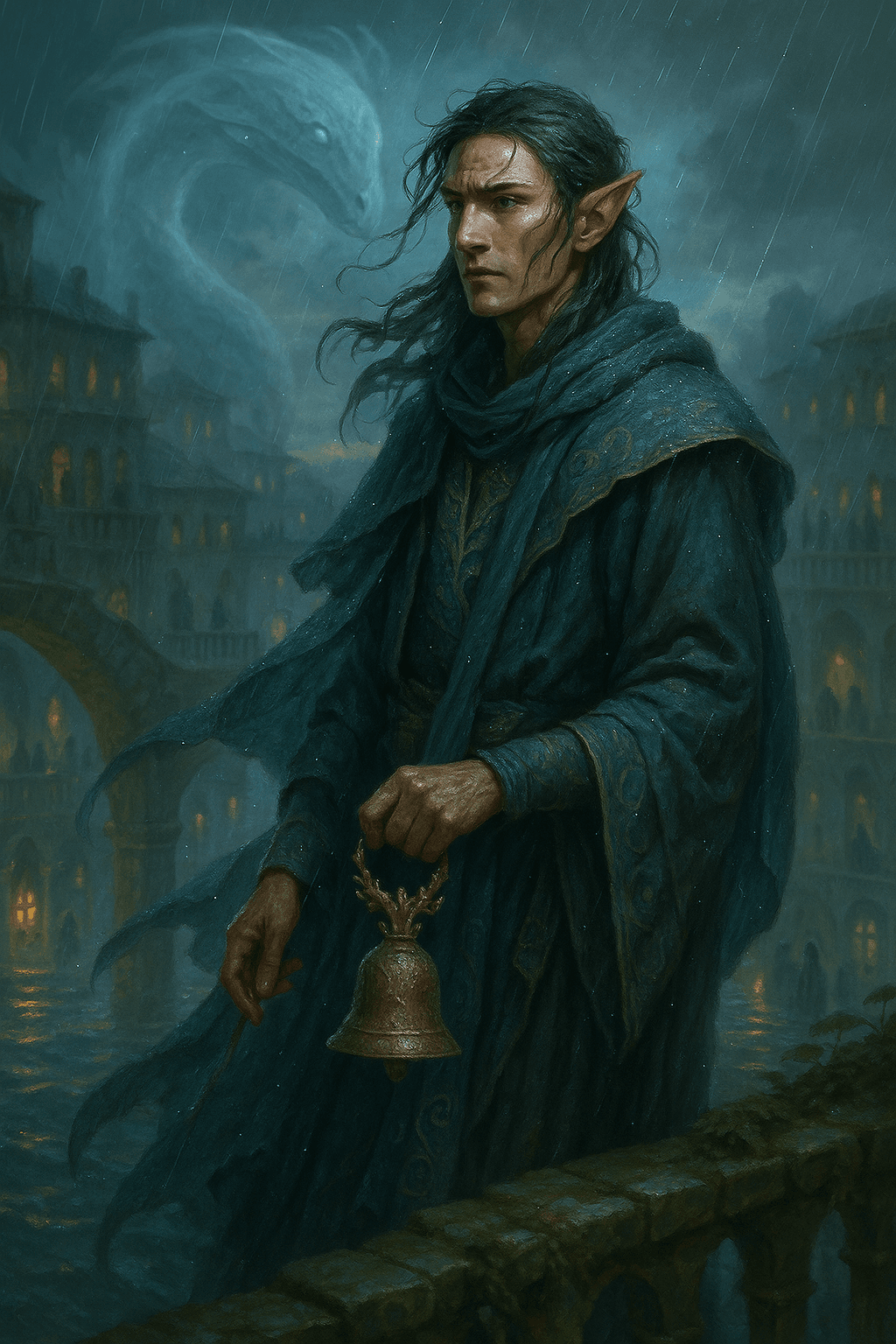
The bell that wakes Vaelorien is not forged of bronze. It is coral and memory, tuned to tides and the ache of a drowned empire. When Tidecaller lifts the mallet and strikes, the sound moves through stone and spirit alike, gathering the living and the lost to a single purpose: endure, and then begin again.
Twilight.
After the Shattering’s long ruin, the coasts of Vaelorien were more graveyard than kingdom—terraces half-swallowed by the sea, balconies speaking only in gulls and ghosts. There, Tidecaller first took up the charge that would become a name. They learned the narrow language of the Mist-Dragons that spiraled above moonlit water and the broader, harder grammar of grief among the survivors. Every council opened by the tide-bell was a lesson in balance: honor the Drowned Spirits who guarded the sunk libraries without letting sorrow freeze the living in place.
Under the banner of House Elavorn, Tidecaller kept the refugees fed, the reef-sanctuaries mapped, and the scavengers turned away. The Pact of Tides—whispered between Vaelorien and Itharûn—owed much to their steady hand. Where warriors saw only trade in relics, Tidecaller saw reciprocity: Vaelorien’s deep-kept lore traded for the mountain kingdom’s steel and sky-patrols to keep poachers from the kelp-windows and flooded amphitheaters. It was a gamble, and some of the older spirits hissed at the word “accord,” but the pact bought nights without raiders and the space to dream of more than survival.
They cultivated trust the way coral grows: slowly, in lattices. Tidecaller did not command the spirits; they petitioned. They taught the living to enter the water with open palms and no fire, to leave tokens in niches where barnacles grew like script. Mist-Dragons responded to that gentleness, letting their coils be counted and their routes charted. Tidecaller stood watch during storm-moons, bell in hand, repeating a simple principle: “We build with what remains, or we build with nothing.”
Still, Twilight sharpened every decision. The Last Sky War burned far away, yet its ash drifted on weather that couldn’t remember the right direction. There were days Tidecaller woke to reports of Echo-hall doors opening on their own, to voices where no mouths moved. They learned to stand comfortably at the edge between worlds, translating the drowned city’s rumble into orders a harbor crew could follow: raise that chain, brace that arch, let that tower go before it kills the divers beneath it. A leader’s courage, they discovered, is most often the willingness to be first into cold water.
Echoes.
The Return of hope did not arrive as conquest or coronation; it arrived as resonance. Some called it the Deep Chime—a pressure in the bones when the currents crossed just so. Tidecaller Aeliryn answered it. The name Aeliryn surfaced with the new era, but the work was the same: gather the faithful, listen to the dead without letting them drown the living, and turn every recovered relic into a tool for tenderness. As Tidecaller Aeliryn, they widened the old pact with Itharûn into open alliance, trading tide-forged wisdom for sky-rider escorts and shared training in coastal rescue.
Now the Tidewyrms swim at their gesture, guardians and partners both. When Aeliryn walks the reef libraries, lanterns flicker as if exhaling. They have learned to call not only the tides but the divided hearts of their people—those who wish to raise whole districts on the backs of chained currents, and those who would let everything sleep beneath the waves forever. Aeliryn insists on a third way: lift what must be lifted, consecrate what must remain, and write a future that both the living and the spirits can read.
Echo Serpents have been seen during the great bell-rings, their bodies sketching sound into light. Aeliryn treats them not as omens but as questions: What, precisely, is Vaelorien becoming? And how do we ensure its music includes everyone who paid to keep it alive?
On embassies to the other realms, Tidecaller Aeliryn arrives without pomp. Salt-crusted robes, wet hair, an easy smile that makes room for reluctance. They bring gifts that smell of the sea and of careful time: pearls strung on reef-thread, pages copied from waterproof ink-sheets, a bell-tone captured in resonant coral and set in a traveler’s case. Their speeches are short. “We drowned,” they say, “and still sing. If you will walk with us, we will share the tune.”
Leadership, to them, is a tide-clock: a steady turn between pull and release, vigilance and rest. Each dawn they ring the coral bell and name three intentions—“Mourn well. Mend wisely. Move together.” The city answers with footsteps on wet stone, with new nursery-lattices for coral, with laughter where, for a long time, there was only the hush of sea over stairs.
In Vaelorien’s blue hour, when rain threads the air and the terraces glow with patient lanterns, Tidecaller is easy to find. Follow the sound that feels like a home you thought you’d lost. You’ll meet a leader who believes the sea can keep what it loves and still return the living to the shoreline.