
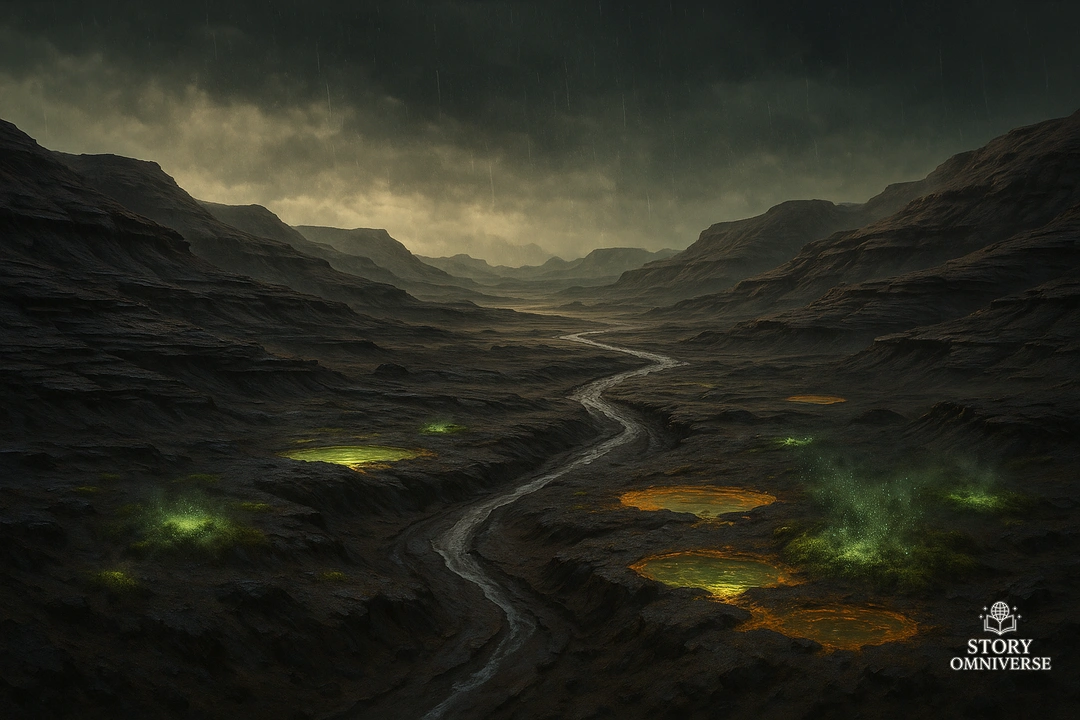
Chapter 1: The Vote Clock
The Resonant Convergence Chamber always sounded like a throat clearing, a low mechanical hum under the ice. Commander Elian Vos stood on the grated platform and watched the filament monitors crawl through pre-lock diagnostics. The air carried the familiar antiseptic bite of decon solvent and cold metal, a smell that meant procedure, not comfort.
Nyra Del stood to his left, shoulders squared, eyes flicking between two screens. She tracked drift the way other people tracked heartbeats. The corridor’s pre-braid telemetry scrolled in tight columns: phase tolerance, harmonic stability, anchor handshake. No surprises. That was the point.
General Ayla Serrin’s voice came through the chamber’s hardened intercom, clipped enough to cut metal. “TRU One. You have eight hours until Oversight convenes. They want to freeze RCD field budgets and unseal portions of the Pulse Index. I am not giving them a reason.”
Vos’s jaw tightened. “Understood, ma’am.”
Dr. Sera Lin leaned toward the mic, polite but firm. “Confirming mission goal. Validate suspected latent node on WLD-119, deliver telemetry, and a hazard model demonstrating controllable risk.”
Serrin did not waste breath on agreement. “Correct. You will return with node telemetry and proof the basin hazards can be bounded. If you come back empty, the Directorate loses authority to keep the Index sealed. That means committees. That means leaks.”
Brick shifted his weight, armor plates whispering. “So we’re doing politics with sand in our teeth.”
Serrin’s tone sharpened. “Corporal Muran, you are doing survival with a clock on your back. WLD-119 sits in a Vorthai influence sphere. I want leverage, not a corpse report.”
Vos held Brick’s gaze until the grin faded into readiness. “You heard her. We bring back numbers.”
Del raised a finger, asking for a half-second. “Primary and harmonic pairs are loaded in the ARK and the PFR. Field tuning will be manual. Ionized layers are expected to crush RF comms. We will default to gestural symbols and short-range line relays only.”
Brick huffed. “Great. Silent desert and hand puppets.”
Oracle’s voice stayed soft. “Silence changes people. Don’t pretend it doesn’t.”
Serrin cut in. “Vos. One more thing. Do not improvise traversal upgrades. No new pulse types. No heroics. Validate, record, return. Fort Resonance remains the only gateway. You do not get creative with endpoints.”
Vos looked at the braided filaments beginning to glow cyan-gold in the chamber air. “TRU-1 copies. Gravestone out.”
As the 432 Hz chime rang, clean and bone-deep, Brick muttered, “If that oversight panel could hear this, they’d vote with their spines.”
Vos stepped into the corridor first. “Move. The vote clock doesn’t stop because we’re scared.”
Chapter 2: Hot Drop Into the Shale Span
Heat hit like a physical shove the moment Vos exited the corridor. The air smelled of baked stone and a faint metallic tang, and the light was hard enough to feel against his visor. The braided filaments collapsed behind them, leaving only shimmering afterimages in the dust.
Del crouched immediately, planting the first EMP-hardened relay into shale and snapping the sensor mesh over it. Brick unfolded a heat-shade panel, locking its struts with a practiced twist. Oracle moved slower, eyes scanning the ridge line and the dry wash below as if listening with her whole body.
Vos signaled with two fingers to his eyes, then outward. Line-of-sight spacing. Del returned the sign and pointed to the wash, then to the ridge crest: perimeter.
Brick tapped his helmet twice and held up a fist. “Comms check,” he said, out of habit.
The radio answered with a hiss and a garbled, distant syllable that might have been Del’s callsign or might have been the wind. Vos switched channels. More static. The ionized upper layers were doing exactly what the brief promised.
Del’s mouth tightened. She raised both hands and performed the tight series of gestures they had drilled: no radio, default symbols, stay within thirty meters, confirm with mirror-sign.
Brick exaggeratedly mimed zipping his lips, then pointed at Oracle, eyebrows raised. “She always wanted us quiet,” he said, though the words were for them, not the airwaves.
Oracle’s eyes flicked to him. “I wanted you to listen. Different.”
They established the heat-shade perimeter in a triangle on the ridge, anchoring skids into shale and setting flood sensors facing the wash. Vos watched Del calibrate the chronometric recalibrator, the device’s readout stuttering as if unsure what the day was doing.
“Irregular spin,” Del said aloud, voice steady. “Day-night cycle variable. If the basin decides to rotate faster, monsoon can arrive early.”
Brick tightened a strap on his water pack. “So it can’t even keep time like a normal planet.”
Vos pointed down the wash, then made the sign for move. Before they stepped off, he caught Oracle’s sleeve.
“Anything?” he asked quietly, close enough that his half-deaf ear didn’t matter.
Oracle tilted her head, the way she did when a thought arrived before its explanation. “The air feels crowded,” she said. “Not hostile. Just… charged. Like a room after an argument.”
Del looked up from the relay. “Ionization. That’s physics.”
Oracle nodded once. “And sometimes physics is the argument.”
Vos released her sleeve and gave the move sign again. The ridge offered no shade beyond what they carried, and the basin below shimmered with heat. They descended in disciplined spacing, hands ready to speak when radios would not.
Chapter 3: The First Puzzle Piece, A Wrong Map
Del walked point, dynamic magnetic mapping tool held like a compass that did not want to be a compass. The screen jittered, arrow spinning, then snapping to a heading that made no sense against the sun and the ridge line.
She stopped and raised a flat palm. Halt.
Vos came up beside her, eyes on the terrain. Ahead, the basin floor spread into a field of rounded depressions, like someone had pressed giant thumbs into the sand. Bubble pits. Low-grav pockets, exactly as the dossier warned.
Del spoke without looking away from her map. “Polar inversion zone is stronger than projected. Bearings are skewing. The node coordinate line wants to drag us through that pit field.”
Brick closed the distance, boots crunching shale. “Or the node is in the pit field and you’re looking for excuses.”
Del’s eyes flashed. “This tool corrects in real time. It’s being lied to.”
Oracle stepped between them, hands lifted in a calming gesture before she spoke. “If the poles drift, the map drifts. That is not a lie. It is a condition.”
Brick snorted. “Condition, lie, whatever. Serrin wants telemetry before Oversight votes. We detour, we lose hours. We push through, we keep the schedule.”
Vos watched the heat shimmer over the pits. Even from the edge, the air above them looked wrong, as if the world’s perspective shifted by a fraction. He pictured an ankle rolling in buoyant sand, a fall that should be minor turning into a broken wrist, a torn suit seal. He pictured the report: controllable risk, followed by a casualty list.
He signed for Del to show him the projected route. She turned the screen, and the plotted line cut straight through the densest cluster of pits.
Oracle leaned in, voice low. “Commander, the basin is already forcing us into silence. Don’t let it force us into haste.”
Brick pointed at the sky, then made a chopping motion. “Monsoon wave could come early. Acid drizzle. We need to reach the node before weather eats our gear.”
Del’s fingers tightened around the mapper. “We can skirt the pits along the shale shelf. Adds distance, but stable footing. And we keep the telemetry nodes we plant readable, instead of losing them in a gravity dip.”
Brick’s gaze snapped to Vos. “Gravestone, call it.”
Vos held the moment, feeling the pressure Serrin had put into his bones. Proof of controllable hazard. Return with numbers. No corpses. He looked at Brick, then at Del, then at Oracle, and realized the puzzle piece in front of him was not the pits.
It was the clock that made people pretend risk was optional.
He signed: detour. Then, to Brick: watch. Slow.
Brick’s shoulders rose, then fell. “Fine,” he said, bitterness leaking through. “But if Oversight cuts our legs off because we took the scenic route, I’m sending them a postcard.”
Oracle’s mouth twitched, almost a smile. “Make it a map. They love maps.”
Del started moving along the shale shelf, plotting a new line by landmarks instead of magnetics. Vos followed, keeping Brick close enough to read his posture, far enough to keep space for a stumble.
Behind them, the bubble pits waited like traps that did not care about politics.
Chapter 4: Gravity That Lies
They reached the first fringe of bubble pits despite the detour, the terrain narrowing until the shale shelf pinched against a sandy basin pocket. Del stopped and pointed to a safer-looking chain of depressions, spaced like stepping stones.
“Only way through without doubling back,” she said. Then, gesturing, she indicated harness protocol.
Brick groaned but complied, clipping balance-assist harness lines to his waist and thighs. Vos checked his own buckles, then Oracle’s, tightening a strap with careful fingers.
Oracle watched him. “You tighten straps like you’re binding a wound.”
Vos met her eyes. “In the field, it’s the same skill.”
Del planted the first insulated telemetry node at the pit’s edge, then another a few meters in. “We quantify the dip,” she said. “Intervals of ten meters. Gravimeter reads local variance. If we have to run this route again, we run it with numbers, not bravado.”
Brick stepped into the first depression and immediately looked offended. His body rose a fraction, as if the ground had decided he weighed less. “Feels like the planet’s trying to make me float.”
Oracle moved in after him, controlled and light. “Five to eight percent,” she murmured, glancing at the portable gravimeter. “Enough to change how you fall. Enough to change how you think you can catch yourself.”
They advanced in a stagger, tether lines clipped to a central spool Brick carried. Vos watched their boots sink into fine sand that behaved like powder. The world’s resistance was inconsistent, a push and release that made the muscles misjudge effort.
Del placed a node, then another, speaking numbers aloud so they could be recorded later. “Dip at six point one. Dip at seven point four.”
Brick tried to hop a narrow ridge between pits, overconfident. His foot landed, slipped, and the reduced gravity turned a stumble into a slow, humiliating arc. He flailed, tether line whipping.
“Brick!” Vos lunged, grabbing the tether and yanking, using his full weight to counter the buoyant fall.
Brick hit the sand hard enough to grunt, but not hard enough to break. The sound that followed was worse: a wet rip. His water bladder, strapped to his side, had cracked against a shard of shale hidden under sand. Clear water bled into the pit, vanishing fast.
Brick stared, rage and panic mixing. “You have got to be kidding me.”
Vos’s voice sharpened. “Seal it.”
Brick slapped at the bladder’s patch kit, hands shaking. “It’s done. It’s gone.”
Del’s face went pale, not from fear but from math. “We can redistribute. But it changes our margin.”
Oracle’s eyes went to Vos, then to Brick. “Heat band is thirty to forty-five. You cannot muscle through dehydration.”
Brick’s head snapped up. “And you cannot lecture me like I wanted to spill it! You made us detour, you made us cross this garbage.”
Vos stepped close enough that Brick had to look at him. “I made us alive,” he said. “You made yourself fast.”
Brick’s chest heaved. “We don’t have time for slow.”
Vos pointed at the cracked bladder. “We don’t have time for dead.”
Silence followed, thick and ionized. Then Oracle touched Brick’s forearm, gentle. “Give me your remaining liters,” she said. “I’ll log rationing. You will not pretend you’re fine.”
Brick swallowed, anger collapsing into reluctant obedience. “Yes, ma’am,” he muttered.
Del resumed placing nodes, voice steadier than her hands. The basin’s gravity lied in percentages, but the argument it caused felt absolute.
Chapter 5: Acid Drizzle on Bare Metal
The sky changed without warning, as if someone had thrown a grey sheet over the sun. Del’s chronometric recalibrator chirped an alarm and then stuttered into a new cycle estimate. The air cooled by a degree, not relief but omen.
Oracle looked up first. “Monsoon wave,” she said. “Early.”
Brick lifted his visor slightly to squint at the horizon, then lowered it fast. “That’s not rain,” he said. “That’s… mist.”
The first droplets hit Vos’s forearm plating and made a sound like quiet frying. Acidic drizzle, low pH, thin enough to seem harmless until it began to chew.
“Rinse protocol,” Vos ordered, voice tight. He signed the sequence as well, in case the static stole his words from anyone’s ears.
Del pulled the rapid-rinse spray from her kit and started coating exposed fasteners, visor seals, and joint seams. Brick swore as he sprayed his own shoulder, the neutralizing solution foaming briefly where it met the drizzle.
“Keep it off the rover,” Del said, pointing toward their compact rover parked under the heat-shade at the ridge perimeter. “Intake pre-filters will clog if runoff kicks up moss.”
As if summoned, water began to sheet down the basin slopes, not enough for a flood yet, but enough to disturb shaded ground near the wash. Spore-fruiting moss, dull green mats in shadow, puffed clouds of fine particles as the runoff struck. The spores rose in a glowing haze, bioluminescent faintly even in daylight, and drifted toward the rover’s air intakes.
Brick coughed inside his mask. “It’s like the planet’s smoking.”
Oracle’s voice stayed calm. “Filters will choke. We need to swap before the engine breathes it.”
Vos and Brick sprinted back to the rover, boots slipping on wet shale. Del followed, carrying the spare pre-filters in a sealed pouch. The drizzle intensified, beading on metal and then eating into it in tiny, hungry patterns.
At the rover, Vos popped the intake panel. The pre-filter was already matted with damp spores, a grey-green felt that resisted his gloved pull.
Brick leaned in, shielding the opening with his body. “Hurry,” he said. “I can hear it sizzling.”
Del handed over the spare. “Don’t tear the seal. If acid gets inside, the fan bearings will pit.”
Vos yanked the clogged filter free. Spores burst into the air in a soft cloud, and Brick flinched instinctively, then forced himself to hold position. His fear of silence had a cousin in this: fear of unseen things filling his lungs.
Oracle arrived, wiping neutral coat along the panel edges. “Breathe slow,” she told Brick. “Your mask can handle it if you don’t panic.”
Brick’s eyes flicked to her. “I’m not panicking.”
Vos shoved the new filter into place and slammed the panel shut. “You’re alive,” he said. “Call it whatever you want.”
The drizzle kept falling, quiet and corrosive. Under the heat-shade, their gear looked suddenly temporary, like toys left out in weather. Del checked the rover’s diagnostic lights and exhaled.
“Filters swapped,” she said. Then, softer: “The basin is accelerating the schedule.”
Vos looked out toward the wash, where water began to gather in shallow channels. “Then we accelerate smarter,” he answered, and signed move.
Chapter 6: Pulse Misdirection, The Clean Signal
They found the ravine by following Del’s landmark route, a shaded cut in the shale where the temperature dropped just enough to feel like mercy. Water trickled along the bottom, carrying spores in luminous threads. The ionized air made their hair prickle inside their hoods.
Del paused at the ravine mouth and lifted her resonance meter. The screen stabilized in a way it had not all day, the noise floor dropping as if someone had turned off a fan.
She looked back at Vos, eyes sharp. “Clean signature,” she said. “Resonance spike consistent with a latent node. It’s… neat.”
Brick stepped closer, relief loosening his shoulders. “Finally. A planet that does something right.”
Oracle did not share the relief. She walked a slow circle, head tilted, listening for something beyond hearing. “It feels staged,” she said quietly.
Del frowned. “The data is clean.”
Oracle’s fingers tapped her sketchbook, a nervous habit. “Clean is not always true. Sometimes it’s absence. Sometimes it’s a reflection.”
Brick laughed once, harsh. “Reflection of what, Doc? The desert’s feelings?”
Vos raised a hand, cutting the exchange. “We test. Short diagnostic oscillation only. No corridor attempt.”
Del unpacked the PFR tripod, its legs sinking slightly into damp shale. Brick drove shallow stakes and attached guy lines, working fast despite the drizzle. Vos watched the ravine walls, conductive shale layered like pages, darkened by moisture.
Del authenticated the PFR with her badge and neural print, then began the oscillation. The unit hummed, a low vibration that climbed toward the familiar threshold.
Ninety seconds in, the readouts were perfect. Phase variance low. Harmonic drift within tolerance. The spectral visor overlay showed filament tension building in clean lines, no fraying at the edges.
Brick grinned. “That’s our leverage,” he said. “Send Serrin a screenshot.”
Oracle’s eyes narrowed. “Wait,” she whispered.
Vos leaned toward her. “What?”
She swallowed, as if unsure how to describe something that lived in her nervous system. “The hum,” she said. “It arrives late. Half a beat. Like an echo pretending to be source.”
Del’s head snapped up. “There’s no latency. It’s local oscillation.”
Oracle shook her head, small and stubborn. “Not latency. Wrongness. The sound is following itself.”
Brick pointed at the PFR. “It’s working. Look at the numbers.”
Oracle met his gaze. “Numbers can be mirrored.”
Vos watched the ravine, the way the sound seemed to bounce off shale and return with a fraction of delay. His scar itched, an old nerve reacting to pressure changes.
He signed hold, then spoke. “We do not escalate yet.”
Del’s jaw clenched. “Commander, the signal is clean. Clean signals are rare in chaotic flux. Standard heuristic says clean equals stable. If we hesitate, we lose the window.”
Oracle’s voice stayed soft but carried. “If we trust the wrong clean, we lose more than a window.”
The PFR’s hum continued, steady and convincing. In the ravine’s shade, it was easy to believe the basin had finally offered something straightforward.
Vos did not believe it. Not fully. But the vote clock ticked in his head, loud enough to compete with the hum.
Chapter 7: Miscalibration Under Orders
The PFR’s diagnostic packet failed to uplink, as expected. Ionized silence swallowed any attempt at long-range transmission. Vos recorded locally, then triggered the field-standard line-of-sight optical burst toward the ridge relay. It was not a traversal trick, just hardened light-pulse comms for when RF died. If the relays survived the acid, Fort Resonance would get the data when the corridor reopened on their end.
Minutes later, his wrist display flashed a short, brutal text that had made it through in fragments: DEMAND VIABILITY PROOF. FULL TEST. TIME.
Serrin’s urgency, compressed into a few words, hit harder than the heat.
Del read it over his shoulder. “She wants corridor viability. Not just a signature.”
Oracle’s hands hovered over her sketchbook as if she could draw a warning into existence. “Commander, don’t,” she said. “If the hum is delayed, the phase is not what it claims.”
Brick’s voice rose. “We are not going back with vibes and poetry. We need the 432 chime on record.”
Vos stared at the ravine walls, the wet shale shining like oil. He pictured Oversight, faces lit by screens, waiting to cut budgets with a vote. He pictured Serrin holding the line alone, and the Vorthai watching for weakness.
He made the decision with a tightness that felt like swallowing glass. “Full dual-pulse test,” he said. “Del, you tune. I’ll authorize.”
Oracle stepped closer, eyes pleading. “At least confirm phase lead. Independent check. We can place a node outside the ravine and compare.”
Del shook her head. “No time. Manual tuning is already tight without AI. We have a stable readout now.”
Brick tapped the PFR casing. “Do it.”
Vos looked at Oracle. “I hear you,” he said. “But I can’t bring Serrin a maybe.”
Oracle’s shoulders sagged, not defeat but fear. “Then bring her a burned relay,” she murmured, “and call it proof.”
Del began adjusting harmonic drift by hand, fingers moving with surgeon precision. The oscillation tightened. The hum deepened. The air ionized, raising the hair on Vos’s arms under his suit.
At ninety seconds, the PFR should have given them the 432 Hz chime, the clean confirmation that the braid was viable.
Instead, they got something else.
A chime, yes, but wrong. It arrived with a stutter, a brief false note that made Vos’s teeth ache. The spectral overlay flickered, filaments appearing and collapsing in the same instant like a blink.
Del swore, loud. “Lock, then lurch. It’s slipping.”
Brick backed away instinctively. “Is that… opening?”
Oracle’s eyes were wide. “It’s trying to,” she said. “And failing.”
The PFR capacitors screamed, a rising whine that cut through drizzle and silence alike. Then a sharp crack. The unit’s side panel vented a burst of hot, metallic-smelling vapor.
Vos grabbed the emergency cutoff and slammed it down. “Hard reset. Now.”
Del’s hands moved fast, shutting down oscillation, initiating cooldown. Her face was rigid with fury at herself, at the ravine, at the clock.
Brick stared at the scorched casing. “Tell me we didn’t just cook our way home.”
Del checked the readout, breathing shallow. “Capacitors are burned. Not total loss, but we need a two-hour cooldown to prevent a cascade. If we force it, we risk a full lockout.”
Oracle looked at Vos, voice quiet. “The corridor key didn’t fit,” she said. “Because the door wasn’t here.”
Vos tasted acid on the air and something worse in his gut: the knowledge that Serrin’s demand had pushed his hand. He nodded once, accepting the consequence.
“Two hours,” he said. “We use them. We figure out what lied to us.”
Chapter 8: The Basin Explains Itself in Pieces
They waited under the heat-shade they had dragged into the ravine mouth, listening to drizzle tick against polymer fabric. The basin’s temperature stayed high, humidity rising until sweat felt trapped. Brick sat with his back to shale, stripping and reassembling a scorched PFR panel with hands that needed work to stay calm.
Del knelt over her tablet, comparing logs. Vos watched her eyes move faster than her fingers, the way she hunted patterns like prey.
Later, Vos would hear his own voice in the debrief recording, flat with fatigue: We assumed clean meant safe. We treated noise like the enemy and forgot it can be a fingerprint.
Now, in the ravine, Oracle spread telemetry node data across her sketchbook, drawing phase curves in graphite that smeared slightly in the damp. “The hum was late,” she said, not accusing now, just stating. “Half a beat. It wasn’t imagination.”
Brick looked up. “So what, the ravine was echoing?”
Del tapped her screen and turned it toward Vos. “Telemetry nodes from the bubble pits show intermittent magneto-lithic pulses. Conductive shale surges. If those pulses align, they can reflect resonance fields.”
Vos frowned. “Reflect. Like a mirror.”
Del nodded. “A resonance mirror. The ravine is shaded, damp, conductive. It could be acting like a waveguide, bouncing the real node’s signature into a clean pocket here. It would look perfect because it’s a reflection with noise filtered out by geometry.”
Brick’s brow furrowed. “So we chased a ghost.”
Oracle traced a line on her sketchbook. “Not a ghost. A mirror that wanted to be believed. That’s why it felt staged.”
Vos leaned closer. “Where’s the source?”
Del overlaid gravimeter logs with the delayed-hum timing. “Seventeen hertz oscillation means a period of about 0.059 seconds. Half a beat is about 0.029 seconds. If the effective propagation through the conductive strata is on the order of tens of kilometers per second, that delay implies a path difference in the kilometer range. Not meters. The real node is not in this ravine.”
Brick jabbed a finger at the map. “Then why was it clean here?”
Del’s mouth tightened. “Because mirrors can be cleaner than sources. They select.”
Oracle looked at Brick. “That’s what I meant. Clean is sometimes absence. The ravine removed the messy parts that tell you where truth lives.”
Brick stared at the scorched PFR, anger turning inward. “And we burned the relay on a pretty lie.”
Vos sat back, feeling the political weight shift in his mind. This was still leverage, maybe stronger. A hazard model that explained spoofed pulse locks. Proof the basin could trick even trained teams.
But it also meant distance, time, and more exposure.
Del continued, voice gaining certainty as the puzzle pieces clicked. “We follow the flash-flood channels. Conductive shale layers are exposed near watercourses. The real node will be near consistent phase lead, likely where magneto-lithic pulses converge. Telemetry nodes we placed are breadcrumbs. We use them.”
Oracle closed her sketchbook gently. “The basin is not random,” she said. “It is chaotic, but it has rules. We just met one.”
Brick exhaled, long. “Next time I see a clean signal, I’m punching it.”
Vos looked at each of them. “Next time we verify phase lead before we touch the harmonic,” he said.
Del’s eyes flicked up, remorse and resolve mixed. “Agreed.”
The PFR cooldown timer ticked toward readiness. Outside, the drizzle softened, but the wash below began to fill, water gathering its own urgency.
Vos stood and signed move, then added aloud, for all of them: “We go to the source. No more mirrors.”
Chapter 9: River Predator Problem, Not the Point
The flash-flood channel cut through the basin like a fresh wound, water rushing brown and fast between shale banks. Acidic pools dotted the edges, bright with chemical seepage, their surfaces iridescent and wrong. The air above them smelled sharp, like batteries.
Del held the portable pH meter over one pool and grimaced. “Low enough to eat uncoated metal in hours. Stay off the edges.”
Brick pulled on shock-resistant waders, muttering. “I miss snow.”
Vos clipped a tether line to Brick’s harness and anchored the other end around a shale spur. “You go first,” he said. “But you go tied.”
Brick looked back, offended. “I’m not a kid.”
Vos tightened the knot anyway. “You’re mass in motion. Same problem.”
Oracle adjusted the sonar fish finder, sweeping the narrow watercourse where it deepened under an overhang. The sonar returned a dense shape hugging the bottom, then another, moving with quick, predatory economy.
She raised two fingers, then pointed down. Predator.
Brick’s grin was tight. “Finally, something we can see.”
Oracle’s eyes stayed on the water. “Seeing it is not the same as surviving it.”
They crossed in a stagger. Water pushed against their legs, stronger than it looked, and the low-grav pockets near the banks made footing unpredictable. Vos felt the tug of the tether as Brick tested a step.
Halfway across, Brick reached down to scoop a sample from a spore-laced eddy into a sealed bag. “Bioluminescent spores,” he said. “Might as well bring home something pretty.”
The water exploded.
A river predator launched from the mud, jaws clamping onto the sample bag with a snap that echoed off shale. The bag tore, spores blooming into the air like green-blue smoke. The predator’s momentum carried into Brick’s leg, and the low-grav edge made him lurch sideways.
Brick shouted, more surprise than pain, and his arms windmilled. His boot slipped, and the current grabbed him.
Vos yanked the tether hard, planting his feet and leaning back, using his weight as anchor. “Hold!” he barked.
Brick’s body jerked, stopped short of being dragged under. The predator thrashed once, then vanished, leaving only churned water and floating fragments of the bag.
Brick panted, eyes wide behind his visor. “It tried to take my damn hand.”
Oracle waded closer, keeping her balance careful. “It took your assumption,” she said. “That you could multitask in a hazard corridor.”
Brick’s breathing slowed, anger flaring. “I was trying to help.”
Vos hauled him the last step onto the far bank and kept hold of the tether until Brick’s boots found stable shale. “Speed costs mass,” Vos said, voice low and controlled. “And mass costs lives. Remember it.”
Brick looked at the torn bag remnants, shame creeping in. “Yeah,” he muttered. “Message received.”
Del arrived behind them, scanning the bank with the resonance meter. “Predators are not the point,” she said, echoing the chapter title in her own way. “The point is the channel exposes conductive layers. The phase should lead here if we’re close.”
Oracle wiped acidic water from her glove with neutral spray. “Everything here bites,” she said. “Some with teeth, some with math.”
Vos looked ahead, where the channel narrowed toward a shale escarpment. The detour, the spill, the burned capacitors, and the flooded crossing had all taken their payment. They were behind schedule now, and the basin knew it.
“Then we keep our hands to ourselves,” he said, “and we follow the lead.”
Chapter 10: The True Node Under Shale
The escarpment rose like a broken wall, shale layered in dark sheets that rang faintly when tapped. Del stopped at its base and lifted the resonance meter. This time, the signal was not clean in the comforting way. It was textured, noisy, alive.
Her eyes widened. “Phase lead,” she said. “Consistent. Not an echo.”
Oracle stepped close, listening. The hum in the air felt forward, arriving before expectation instead of after, as if the world was speaking first. She nodded once. “On-time,” she whispered. “It’s here.”
Brick leaned his shoulder against the rock, exhausted and relieved. “So the ravine was the mirror and this is the ugly truth.”
Del gave him a look. “Truth is rarely pretty.”
Vos directed them with gestures. Brick drilled shallow anchors into the shale using a compact driver, each bite of the tool sending vibrations through the rock. Del unfolded the PFR tripod carefully, placing its feet on anchored plates to prevent micro-slips in the damp.
Oracle and Vos stretched sensor shielding mesh over the setup, creating a loose dome to blunt the ion noise. The mesh crackled faintly, catching static like a net catching insects.
Del authenticated the PFR again, hands steady despite the earlier burn. “I’m going to retune using the mislock as a negative pattern,” she said. “We know what the mirror looked like. We avoid it.”
Vos stayed close. “Talk me through it.”
Del adjusted harmonic drift in small increments. “The ravine lock had delayed hum, phase lag. Here we want phase lead. If the oscillation tries to settle into lag, we pull it back. Manual tuning within plus or minus zero point zero zero three hertz.”
Brick watched her fingers. “No pressure.”
Oracle placed her palm lightly on the shale, eyes closed for a second. “It feels like standing near a machine that is awake,” she said. “Not sacred. Just running.”
The PFR hummed. Dust lifted. The air ionized, but the mesh held the worst of it. Vos watched the spectral overlay as invisible filaments began to converge, tension lines forming with a steadiness that made his shoulders unclench.
At ninety seconds, the 432 Hz chime arrived.
It was unmistakable, clean and immediate, no stutter, no false note. The filaments braided into a visible corridor shimmer, cyan-gold threads twisting with disciplined grace.
Brick let out a breath that sounded like laughter. “That’s the sound Serrin wants.”
Del’s eyes shone with fierce satisfaction. “Corridor health packet recording,” she said, voice tight. “Full telemetry. Stability within acceptable bounds.”
Vos raised his wrist display, recording the chime and the braid’s metrics. “We have it,” he said.
Oracle opened her eyes and looked at the corridor, expression calm but not triumphant. “Momentary understanding,” she murmured. “Not mastery.”
Vos did not argue. He simply nodded and signed: record everything, then close.
They had their proof, and the basin had taught them exactly how expensive proof could be.
Chapter 11: Return With Small Truths
The sky darkened again, the irregular spin cycle shifting light as if the planet were impatient. Del’s chronometric recalibrator chirped a warning of another monsoon surge building beyond the horizon. The flood sensors they had left on the ridge were out of sight now, but Vos could imagine their rising thresholds, the wash turning from hazard to trap.
He did not hesitate. “Extraction now,” he ordered. “We close clean.”
Brick began packing the PFR, careful with the scorched components, wrapping them in acid-resistant cloth like wounded parts of an animal. Del secured the recorded corridor health packet and mirrored-signal data into encrypted storage, then checked the return authorization shard integrity on each of their badges. The shard was not a new capability, just the standard Fort Resonance-issued return credential that allowed a team to re-enter the same anchored corridor they arrived through, provided they could re-establish a stable braid at the validated node.
Oracle stood close to Vos as he initiated the corridor closure sequence. “You’re thinking about Serrin,” she said quietly.
Vos kept his eyes on the filament tension readout. “I’m thinking about Oversight,” he replied. “They’ll call this ‘manageable’ and then demand we do it faster.”
Oracle’s voice softened further. “Then give them the part where it spoofs locks. Make them afraid of their own certainty.”
Del stepped in, hearing enough. “We can model the resonance mirror,” she said. “Magneto-lithic pulses in conductive shale create reflection pockets. Clean signals must be validated by phase-lead confirmation from independent nodes. No exceptions. If they want a rule that saves money, this is it. It saves lives first.”
Brick slung his pack on, wincing as acid-stiffened straps creaked. “So we’re writing a new rule because the desert tricked us.”
Vos looked at him. “We’re writing a rule because we listened when it did.”
The corridor shimmered, stable. Vos gave the close command at the proper interval, not rushing, not lingering. The filaments tightened, then collapsed inward with a final, soft chime like a door shutting.
They traversed back through the same Fort Resonance-anchored braid they had arrived on, now re-established at the true node rather than the mirrored pocket. The air cooled by two degrees as the corridor swallowed them. When they stepped onto Fort Resonance’s grated platform, the Antarctic cold felt like a slap and a blessing.
Serrin met them on the other side of the chamber bulkhead, flanked by security and a single pulse operator. Her eyes went to the scorched PFR casing first, then to Vos’s face.
Vos saluted. “Telemetry acquired. Corridor health packet recorded. We encountered a resonance mirror that spoofed a clean lock and burned capacitors during a forced dual-pulse test.”
Serrin’s gaze sharpened. “You forced it.”
Vos held her stare. “Under your demand for immediate viability proof.”
A flicker, not quite guilt, crossed Serrin’s face. Then it hardened into command again. “And you recovered.”
Del stepped forward, offering the data module. “The basin can spoof pulse locks via reflected signatures. We have a hazard model and a phase-lead confirmation protocol. The clean-signal heuristic is unsafe on WLD-119 without independent validation.”
Serrin took the module. “Oversight will hate this,” she said. “Which means it will work.”
Brick muttered, just loud enough, “They can try crossing that wash themselves.”
Oracle looked past Serrin, toward the sealed doors that led deeper into the fort, toward politics and budgets and secrets. “We didn’t solve the Leyweb,” she said. “We learned one more way it lies.”
Serrin nodded once, accepting the small truth. “Sometimes that is all the victory you get,” she replied. “Go decontam. Then sleep. I’ll fight the vote clock.”
Vos watched his team move, tired but intact, and felt the tension ease without breaking. Momentary understanding, held just long enough to bring home.

0 Comments