
Thalia Fernstep
Edge-walker, question-keeper.
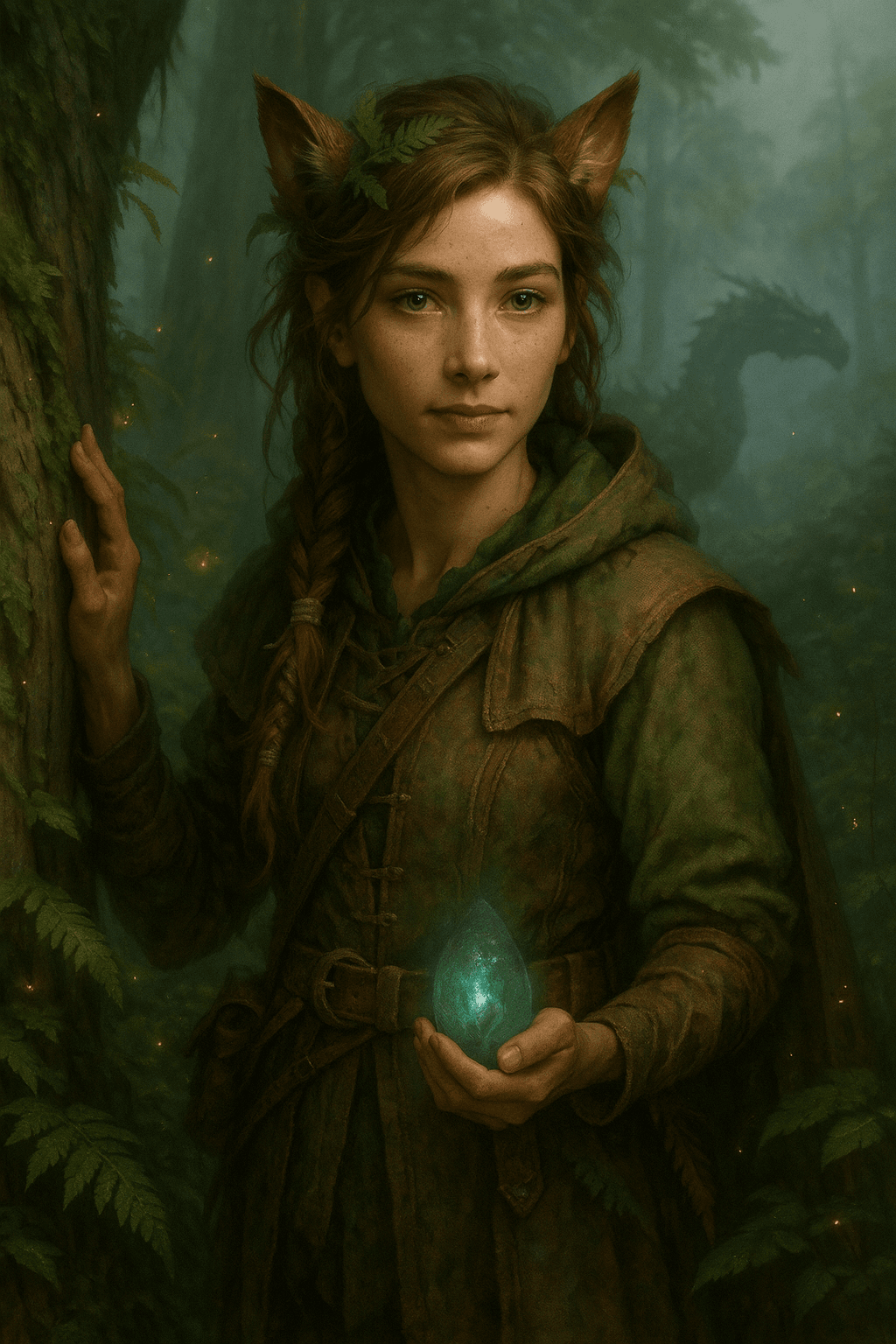
Thalia Fernstep learned to read the forest long before she learned to read a ledger. The elders said she walked like new growth—quick, a little reckless, and somehow always pointed toward light. She was youngest of the Verdant Circle’s border scouts, a Beastkin with fern-green eyes and a knack for finding paths where maps swore there were none. If Elder Mossbeard taught that oaths should be planted, Thalia taught that questions should be watered—asked again and again until they sprouted into better ways.
Origins.
In the first age of Galdrowen, when druids still argued over whether the forest wanted councils at all, Thalia haunted the edges. She ran the shadowed margins between grove and open land, marking safe crossings with a three-pronged sigil pressed into damp soil—fernstep, the wardens started calling it. She watched Thornspine drakes practice their border dances and learned to move beside them without earning the famous bloom of quills. Rootcaller Brannok, bear-broad and patient, took a protective shine to the curious scout; he taught her how to listen for the hum that means a ley-thread is near, how to test bark for sickness with the back of the hand, how to back away from a Grove-Wyrm’s dreaming ground with your pride intact.
She asked questions that made elders uncomfortable. Why are warnings always walls and never songs? Why do we meet the Mire only in rumor? When the neutral parley at Swale Glade brought Elder Mossbeard and Vineheart into the same mist, Thalia served as the Circle’s eyes along the approach, circling wide through sedge and shadow. She carried no spear—only twine, salve, and a scrap of bark inscribed with Mossbeard’s quiet rule: seek accord before victory. Nothing grand happened that night beyond listening, but Thalia went home convinced that listening was grand enough.
The Withering Skies dimmed the forest’s pulse, and even the Grove-Wyrms slept heavier. Thalia kept the routes breathing—lighting fungus with a whispered charm, lifting storm-fallen branches off warding stones, guiding foragers around places where magic had gone thin and mean. When Kara Windshade began her careful study of Thornspine venom, Thalia volunteered to carry notes between field and grove, using her runs to test whether the new salves soothed blight as well as they soothed wounds. The answer was often: yes, if you sing to the tree first. She wrote that into the margin. Kara circled it twice.
Between.
Years widened around her. Galdrowen grew more sure of itself, and Thalia’s fernstep marks stitched the map like green thread. She earned a quill-oath from a border drake—one shed Thornspine spine dulled and braided into her hair—not to brand her a warrior, but to promise she’d sharpen where others could not. She traveled light but returned heavy with stories: Luminari scholars who traded star-charts for root-lore; Itharûn riders glimpsed as silhouettes against sunrise; the way the Mire’s wind smells like memory when it’s about to lie. The elders filed her reports in the council roots. Mossbeard would read them, smile that slow smile, and send her back out with more salve and fewer answers.
Twilight.
Then the world drew in. War at the horizons. Skyreach dimming. Galdrowen closed ranks, quilts of shed quills humming along the border in a hard key. The Elderwood Guardian took the Circle’s burden with the steadiness of old oak, and Thalia bowed to the choice—then started arguing with it. Isolation, she said, was a fine shield and a terrible teacher. If the forest’s task was to endure, it should also remember how to welcome.
She did not defy the Guardian; she complicated him. She led wardens on “listening patrols,” moving the perimeter out by a single tree and then another, stopping where the quilts grew quiet and asking the quiet what it wanted. She mapped forbidden groves not to trespass but to place clearer warnings in the understory—woven reed-signs that a clever poacher might notice before a Thornspine did. When Duskfall scouts pressed curious tendrils toward a ley fissure, Thalia drove them back with smoke and song, then left a basket of spruce tea at the edge: a message that said both no and we remember you.
Her disagreements with the Guardian were the respectful kind that last long after tempers cool. In council she spoke for paths, not breaches; for trade that tasted like trust; for apprentices who learned as many greetings as alarms. Brannok stood behind her like a hillside, gruff in public, tender as moss in private. “Mind the edge,” he told her. “Edges cut, but they also let you see.” She nodded and laced her boots a little tighter.
What remained constant was her habit of bringing back more than she took out. She returned with seeds stuck to her cloak from roads no one had walked in a while; with songs picked up from charcoal burners who didn’t know the forest could hear them; with careful sketches of Mire runes left where moonlight could read them. She trusted the Circle to decide which finds belonged inside the quilts and which should be set gently at the border for the wind to claim.
Some characters become legends by standing at the center of great events. Thalia Fernstep’s legend lives at the edges—on the narrow trails between yes and no, in the needle’s eye where a border can also be a door. Ask any warden who runs the evening circuit and they’ll point to a sigil pressed near a root: three lines like a small green hand. “Fernstep,” they’ll say. “Safe if you mean to be.”