
Witchpine
The Town of Steam and Shadows
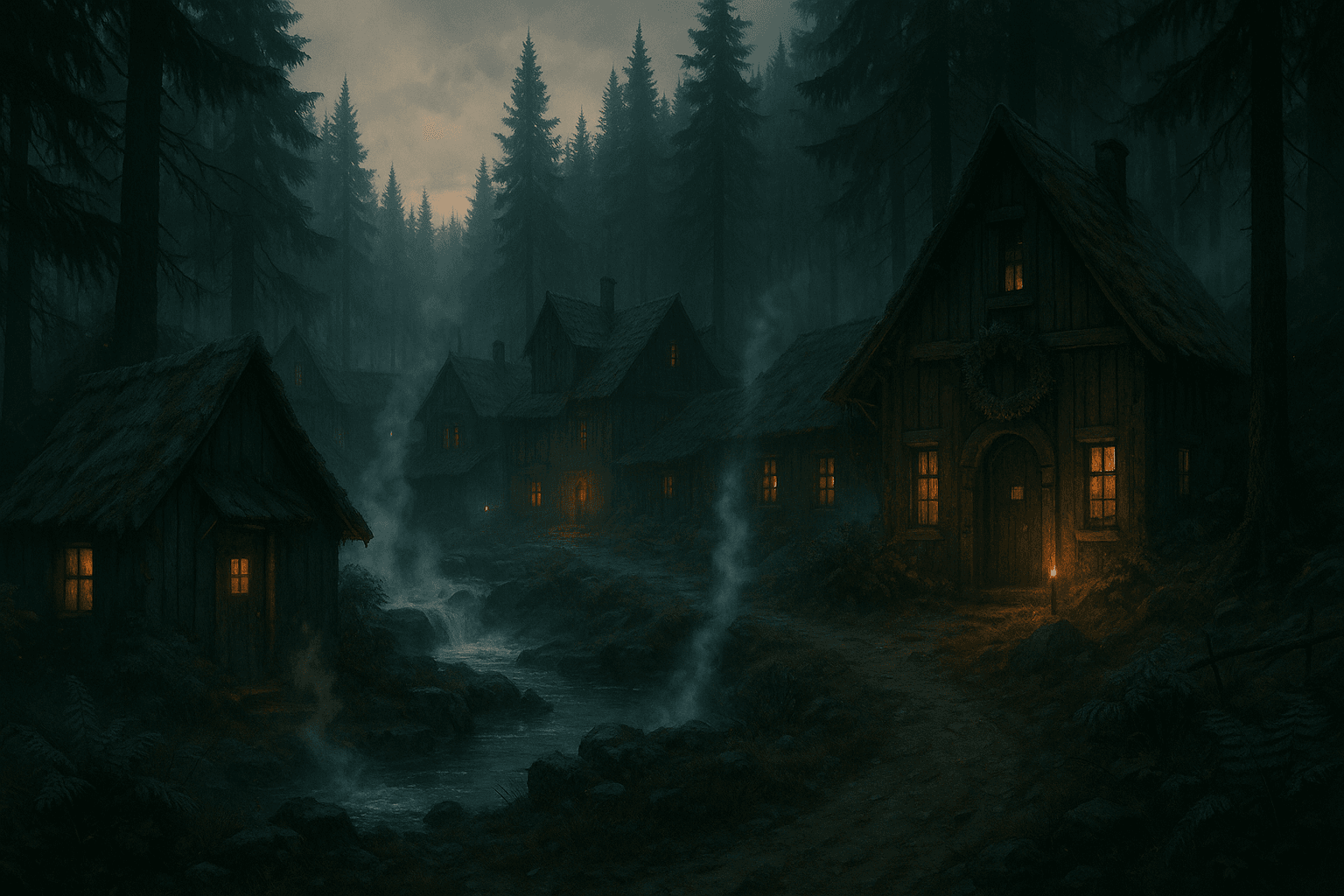
Tucked deep within Verrowind’s misty highlands lies Witchpine, a place where time seems to pool and swirl like the steam rising from its natural hot springs. Here, the pine groves grow so dense they blot out the sun for much of the day, and the air carries a mingled scent of resin, moss, and faint mineral heat. The town, home to only 1,400 souls, is as much a sanctuary as it is a secret—welcoming to those who seek healing, yet watchful toward those who come with questions.
Witchpine’s identity is inseparable from its springs. For generations, the Steam Blessing Ceremony has marked the turning of seasons, when townsfolk gather in the main bathhouse to immerse themselves in water believed to carry protective properties. Young and old alike leave wearing garlands of pine needles, symbolic of renewal and warding. The more daring participate in the Pine Needle Trials—a ritualized endurance test weaving through the steep groves, designed to honor stamina and respect for the land.
Meals here are quiet affairs, steeped in the flavors of the forest. Pine syrup glaze coats roasted vegetables and game; springroot dumplings are served steaming, accompanied by tea brewed from wild herbs found only in the surrounding hills. Visitors often find themselves lingering over their plates, lulled by the rhythmic sound of the springs bubbling in the distance.
The stories that circulate in Witchpine are not the kind told for mere entertainment. The most persistent is that of the forest spirits—watchful entities said to mark travelers with droplets of sap. Those marked are believed to face a trial: either protection through their journey or punishment for a transgression unknown to them. Town elders advise outsiders to tread carefully, for the forest is said to remember.
High Elder Lyra Wend, the Springkeeper, is the quiet axis around which Witchpine turns. Rarely seen outside the steaming courtyards of the springs, she communicates with the outside world only through trusted envoys. When the Serious Crimes Unit comes to investigate, she remains neutral in words but guarded in spirit. It is not hostility—it is preservation. Witchpine has its own way of dealing with trouble, one shaped by centuries of close ties between people and land.
Public opinion on the SCU is a careful balance. Some residents quietly welcome their intervention, especially when disappearances stir fear along the forest trails. Others see such involvement as a disruption to the equilibrium, a force that might anger whatever dwells in the deeper woods. As one elder put it: “You can fix a broken road, but if you meddle with the roots, the whole forest shifts.”
The streets of Witchpine are narrow and winding, lined with timber buildings whose eaves are draped in drying herbs. Steam rises in thin threads from grates in the cobblestones, a constant reminder of the springs below. At dusk, the pine canopy casts long shadows that stretch and shiver like living things. It is a place that leaves an impression—sometimes comforting, sometimes unsettling, always unforgettable.