
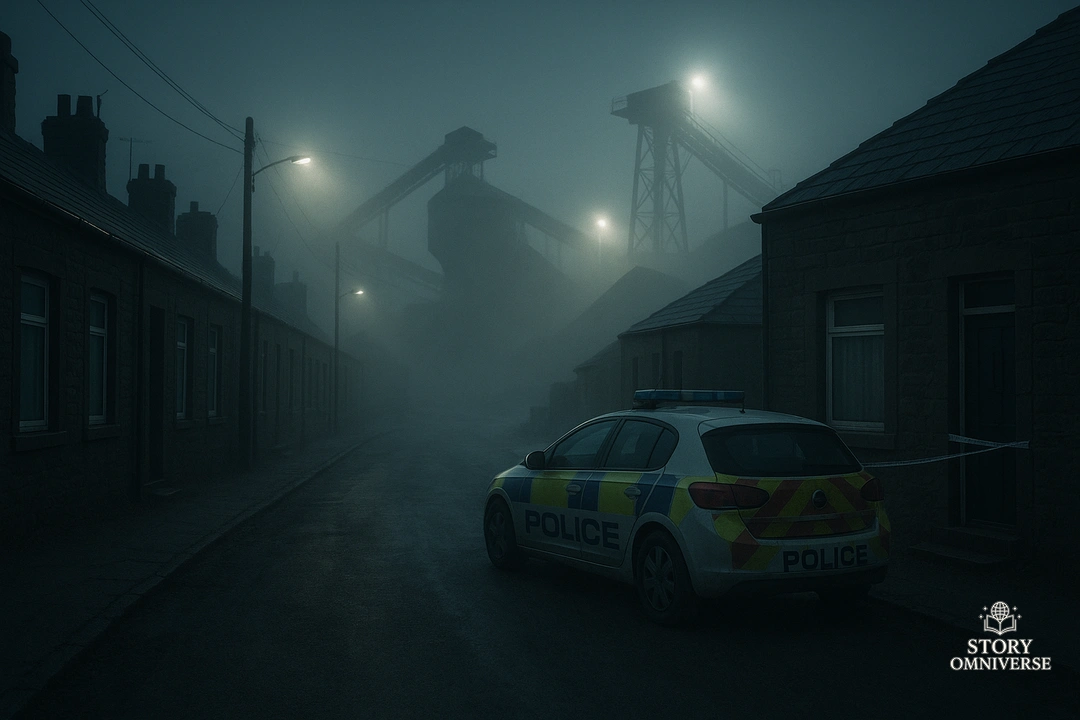
Chapter 1: Quarry Town Welcome
The SCU sedan crested the last hill into Stoneford and the quarry came into view like a raw wound in the earth. Conveyor belts hummed. Dust hung low over neat rows of workers’ cottages. Mira Lorne watched the town settle around them, shutters half-drawn as if the buildings themselves were squinting.
“Wary,” Yara Novik said, reading the street like a witness. “They clocked our plates the moment we crossed the sign.”
Elias Vann adjusted the evidence kit between his feet. “Greyhaven Metropolitan Municipality seal does not win hearts out here.”
At the rented cottage, local police had already strung tape, but the knot was sloppy, like it had been done in irritation. Chief Rell Sorn stood in the doorway with the mayor, Halden Kree, a broad man in a work coat that looked too clean for quarry dust.
Mayor Kree’s eyes flicked to Mira’s badge. “Special Cases Unit. We didn’t request you.”
“You got a gunshot death,” Mira said. “You requested us when you called it in.”
Kree’s jaw tightened. “We called Greyhaven. Greyhaven sent you.”
Chief Sorn stepped in. “We’ve preserved the scene. We’ll handle statements. Press is already sniffing around.”
Mira glanced at the two local reporters penned behind a cruiser. “Press stays outside the perimeter. That includes you, Mayor.”
Kree gave a short laugh. “This is Stoneford. We do not need outsiders turning a tragedy into a spectacle.”
“A tragedy is not a jurisdiction,” Mira said, and ducked under the tape.
Inside, the cottage smelled of radiator heat and stale cigarettes. The living room was narrow, furniture pushed too close to the walls. A man lay on his side near the kitchen threshold, one arm folded under him. The blood was contained, darkening the floorboards without splatter across the room.
Mira stopped at the threshold and looked back at the nearest uniform. “Scene log. Now. Names, times in and out. No exceptions.”
The constable blinked, then fumbled for a clipboard.
“Entry points,” Mira said, switching into procedure. “Elias, doors and windows. Yara, photograph the victim’s hands, close and wide. I want trace, nails, wrists. Then the room, then the casing.”
Yara knelt with the camera, voice calm. “Hands first. Then face for ID.”
Elias moved to the front door, careful not to step over the body’s line of travel. “No forced entry on the latch. Deadbolt engaged from inside? Or locked after.”
Mira crouched near the kitchen, eyes scanning. A single spent casing sat near the base of the fridge, glinting. She marked it with a tent, photographed it in place, and only then nodded to Elias.
Chief Sorn appeared behind her. “You’re contaminating our case.”
Mira didn’t look away from the casing. “We’re documenting every step. Your officers can observe. They don’t touch.”
Mayor Kree’s voice cut in from the doorway. “This man was a convict. People warned the landlord. He brought trouble.”
Mira rose slowly. “He brought a bullet. That’s what we’re here for.”
Kree’s face reddened. “You’ll stir up Greyhaven politics and leave us to clean it.”
“Then give me clean access,” Mira said. “And keep your press narrative out of my evidence.”
Outside, the quarry’s machines kept grinding, indifferent. Inside, Mira’s camera shutter clicked like a metronome, counting seconds until Stoneford’s tight silence broke.
Chapter 2: The Victim No One Wants to Mourn
Dr. Ivo Grell arrived with his field bag and the faint impatience of a man whose work was always interrupted by other people’s opinions. He stepped around the body with practiced care, gloved hands hovering before committing.
“Recently deceased,” he said, voice low. “No rigor fully set. If your locals told you this was a street hit, they’re guessing to soothe themselves.”
Chief Sorn stood by the door, arms crossed. “He was found by the landlord this morning. We heard a shot in the night. People assumed.”
Grell leaned closer to the wound, not lingering, not theatrical. “Close range. Confined space. Likely within a meter. No sign of a struggle that would match an ambush outside.”
Mira watched the room again. The angles were wrong for a street shooting. The cottage walls held the sound, held the truth.
Yara rose from photographing the hands. “No obvious defensive wounds on fingers. Nails look clean. If he fought, it wasn’t here.”
Grell nodded toward the kitchen. “And the shot was fired here. You see the lack of spread? The directionality suggests he was facing someone he knew. Or at least someone he allowed close.”
Outside, Yara began canvassing. Stoneford’s streets were tight and orderly, each yard trimmed, each porch swept. Doors opened only a fraction. Faces appeared like cautious moons.
At the first cottage, an older woman kept her chain on. “I didn’t see anything.”
“Did you hear anything?” Yara asked, holding her notebook where it could be seen, not thrust.
“A bang,” the woman admitted. “But that house always had banging. He was trouble before prison.”
Yara wrote it down. “Banging like what? Shouting? Things thrown?”
The woman’s eyes darted past Yara, to the road. “Not my business.”
“Was there a woman there?” Yara asked. “Did you ever hear her?”
A pause. The chain rattled as the woman shifted her weight. “Sometimes. Quiet voice. Then his voice would go quiet too. Like someone turned him down.”
At the second door, a man in a foreman’s jacket stared at Yara’s badge. “We don’t like Greyhaven in our business.”
“This is a homicide,” Yara said. “It is everyone’s business.”
He shrugged. “He got out and started walking around like he had rights. People don’t forget what you did.”
“What did he do?” Yara pressed.
“Ask the papers,” the man said, and shut the door.
By the fourth house, the pattern felt deliberate. Evasion wrapped in moral certainty. The same phrase, repeated like a prayer: trouble before prison.
Yara returned to the cottage and found Mira by the kitchen radiator, staring at the baseboard as if it might speak.
“Neighbors are locked down,” Yara said. “They talk like he deserved it. Like it’s a natural consequence. One woman said she heard him get ‘turned down’ by someone, like he learned to stop talking.”
Mira’s mouth tightened. “That’s convenient. If he’s ‘inevitable,’ no one has to ask who pulled the trigger.”
Grell stepped out of the bedroom area, stripping his gloves. “One more thing. There are older marks. Subtle. Bruising patterns that do not match a single fall or a single fight. I can’t conclude without full examination, but it suggests ongoing harm.”
Yara’s eyes narrowed. “Domestic?”
Grell didn’t dramatize it. “Possibly. Hidden injuries often are. And the placement matters.”
Chief Sorn’s voice floated in from outside. “Mayor says the press is calling it gang related.”
Mira looked at the body again, then at the neat cottage, the locked doors, the town’s practiced contempt. “Stoneford wants a story that ends quickly,” she said. “We’re going to give them one that’s true.”
Chapter 3: A Personal Thread
The victim’s face had been turned slightly toward the kitchen tile, and at first Mira refused to let recognition land. She had seen too many dead men. Too many familiar shapes.
Then Grell lifted the chin for a photograph and the light hit the cheekbone. The scar near the ear. The crooked tooth visible between parted lips.
Mira’s stomach tightened. “Jarek Pell,” she said, before she could stop herself.
Yara looked up sharply. “You know him?”
Elias paused mid-note, pen hovering. “From where?”
Mira forced her voice into the same flat line she used for every scene. “Older Greyhaven case. He was an informant. It went bad.”
She did not add that she had promised him, once, in a stairwell that smelled of bleach and cheap beer, that if he helped them he would be safe. She did not add that his release had been argued over in rooms she was not invited into.
Chief Sorn overheard and scoffed. “So your city made him, and now you want to blame us.”
Mira turned on him. “No one is blaming your town for his past. We are investigating his death.”
Sorn held her gaze a beat too long, then stepped away.
Back at the temporary SCU table set up in the cottage’s front room, Mira leaned close to Elias. “Pull sealed records. Everything tied to Pell’s release conditions. Parole contacts, restrictions, who signed what. And get me his parole plan. What he said he wanted when he got out.”
Elias blinked. “Sealed? We need authorization.”
“Then request it,” Mira said. “Put my name on the request.”
Yara watched Mira’s face, reading what wasn’t being said. “Mira. If this is personal, we need to declare it.”
“It’s relevant,” Mira replied. “He was connected. He always was.”
Her comms buzzed. SCU command, Greyhaven. Mira stepped outside into the cold air, away from the listening locals and the mayor’s hovering silhouette.
Commander Sile’s voice was clipped. “Lorne. We’re hearing you knew the deceased.”
“I worked him as an informant,” Mira said. “Years ago.”
“Then you keep your personal history out of the file,” Sile snapped. “Stoneford’s already calling this Greyhaven interference. You will not hand them a narrative of vendetta policing.”
Mira stared at the quarry trucks rolling by, each one a moving wall. “My history is not the file. But it affects access. Pell’s release conditions will tell us who had him on a leash.”
“Do your job,” Sile said. “And do not let old guilt steer the unit.”
The line cut.
Yara stepped out after her, quiet. “They’re worried you’ll overreach.”
“I’m worried we’ll underreach,” Mira said. “Stoneford wants this closed by sundown.”
Elias emerged, holding his phone like it was fragile. “Records request filed. Parole plan too. But if they deny, we wait.”
“We don’t wait,” Mira said. “We re-interview anyone who had access to Pell after release. Parole office, landlord, partner, employer, whoever fed him.”
Yara’s eyes softened, just a fraction. “You promised him something, didn’t you.”
Mira didn’t answer. She watched the cottage door, the place where Jarek Pell had stopped being a problem for Stoneford and started being a problem for her.
“Get me names,” she said. “We work forward. Not backward.”
Chapter 4: The First Red Herring
Elias sat in Stoneford station’s cramped evidence room with his laptop balanced on a metal table that wobbled if he breathed too hard. He had Pell’s battered handset in a Faraday pouch, the screen spidered with cracks. A local evidence clerk watched with tight lips as Elias filled out an SCU intake form.
“Phone is logged,” Elias said, sliding the form across. “Time, date, collector, seal number. I want your signature and mine. Chain-of-custody starts now.”
Chief Sorn hovered in the doorway. “You city people always think the phone tells the truth.”
“It tells a version,” Elias said, not looking up. “Better than rumor.”
He pulled call logs and extracted location pings. The map populated with dots that jumped between Stoneford and Hollowbrook, a halfway town with a parole house that served as a funnel. One number repeated, unnamed, frequent.
Elias printed the contact list and brought it to Mira and Yara in the station’s interview room. “Calls to a parole-house contact. Name in our system. Dalen Rusk. Gang ties from Docklands.”
Yara leaned over the paper. “So Stoneford’s ‘street hit’ rumor isn’t random.”
Mira’s eyes narrowed. “Or it’s a story they’re happy to borrow.”
They drove to Hollowbrook under a sky that threatened snow. The halfway house sat behind a chain-link fence, paint peeling, a place designed to look temporary so no one felt responsible for it.
Inside, the director, a tired woman named Sera Vint, met them with a clipboard held like a shield. “We comply with law enforcement. But we don’t like raids.”
“It’s an interview,” Mira said. “We’re looking into Jarek Pell’s last contacts.”
Sera’s face tightened. “Pell. He was trouble. Always looking for shortcuts.”
Yara’s pen moved. “Who did he call here?”
Sera hesitated, then nodded toward a common room where a thin man sat watching a silent television. “Dalen. He runs his mouth. Thinks he’s connected.”
Dalen Rusk smirked when they approached. “SCU, huh? Greyhaven’s finest. What, you’re here to pin a dead man on me?”
“We’re here because you spoke to him,” Mira said. “Multiple times. What did he want?”
Dalen spread his hands. “Money. Always money. He owed someone. You know how it is. Prison debt.”
“Who?” Yara asked.
Dalen’s eyes flicked to Elias’s laptop bag. “A creditor. Name’s Kelm. Runs collections out of Docklands. Pell was scared. Said he’d be made an example.”
Mira held his gaze. “And you just happened to have that name ready.”
Dalen shrugged. “People talk. Pell talked. He said he had something that could buy him time.”
“What something?” Mira asked.
Dalen’s smirk thinned. “He didn’t say. Just that it was ‘Stoneford clean.’ Like, not our world.”
Sera Vint stepped in quickly. “Pell came by two nights ago. Agitated. Asked if we could hide him. We said no. Rules are rules.”
“Did he mention Stoneford?” Elias asked.
“He said he’d messed up,” Sera replied. “Said he shouldn’t have trusted someone ‘clean.’ That’s what he said. Clean.”
Mira’s pulse ticked. Clean could mean anyone. Or it could mean the town’s idea of itself.
Back in the car, Yara looked at Mira. “This creditor story is neat. Too neat. And he’s careful. He gives us a villain with a name and a neighborhood.”
“It’s a red ribbon,” Mira said. “Tied on a box they want us to open.”
Elias scrolled through the pings again. “Still, the calls are real. And Hollowbrook is real.”
Mira stared out at the road leading back to Stoneford. “We follow it,” she decided. “But we don’t marry it. If Stoneford’s feeding us a revenge shooting, we prove it or we cut it loose.”
Yara nodded. “And if it’s a misdirection?”
Mira’s voice went cold. “Then someone in Stoneford is hiding something worse than a dead convict.”
Chapter 5: Inside the Cottage, Outside the Story
TacMesh arrived in the form of a compact kit and a patient technician who spoke only when asked. Yara guided the scan through the cottage, watching the laser grid paint the narrow rooms into measurable geometry.
“Sightlines,” Yara said, pointing. “From the kitchen doorway to where he fell. Shooter stands here, close. No need to chase him down.”
Mira walked the path again, careful to step where they had already documented. The cottage felt smaller each time, like the walls were leaning in to keep secrets warm.
The technician confirmed Yara’s hunch. “Confined shot. Minimal movement. Likely a known contact. No forced entry, no broken glass.”
Yara crouched near the radiator. “Second sweep,” she said. “Paper, fibers, anything that doesn’t belong.”
Chief Sorn’s officer, a young constable with defensive eyes, sighed. “We already searched.”
“Then you won’t mind us being thorough,” Yara replied, polite enough to sting.
Mira ran her gloved fingers along the baseboard by the kitchen radiator. The wood was slightly warped from heat. Dust gathered in a thin line. Something caught under her nail, not dust, but paper.
She paused. “Yara. Light.”
Yara angled her flashlight. Mira eased the baseboard edge back with a thin tool, careful not to tear anything further. A crumpled strip of paper emerged, torn on one side like it had been ripped in anger. Handwritten. Ink smudged where fingers had sweated.
Mira held it up, breath shallow. “Evidence bag,” she said, but she didn’t let go until the bag was open and ready.
Elias leaned in. “What does it say?”
“Not here,” Mira said. “Photograph first, then we read in controlled conditions. And log it. Collector, time, seal number.”
Yara photographed it in place, then in Mira’s gloved hand, then as it slid into the bag. Elias wrote the seal number on the scene log and on the evidence label, reading it back out loud so it matched the camera audio.
Grell stepped into the kitchen, his gaze going from the note bag to the body’s exposed wrist. “Before you leave,” he said quietly, “I need you to hear this without the town’s noise.”
Mira turned. “Go on.”
Grell’s voice stayed clinical, but his eyes were tired. “There are older bruises. Faded yellowing along the upper arms and ribs. Repeated. Not consistent with a single brawl. And his wrists show faint, older abrasions. Like someone used a cord or a tight grip more than once.”
Yara’s posture changed, anger tightening her shoulders. “He was being hurt and nobody reported.”
Chief Sorn’s officer muttered, “He was a criminal. Probably got into fights.”
Grell looked at him. “Bruises on the inner arm are not from fights. They are from being grabbed. Held. And the pattern on the ribs suggests repeated impact in the same area, not random.”
Silence settled, heavy.
Mira stared at the bagged note. “So Stoneford’s story is that he brought trouble,” she said. “But what if trouble lived with him?”
Yara nodded toward the sealed evidence bag. “And the note is the first time he tried to speak. Or the first time someone tried to speak through him.”
Mira’s phone vibrated again, a notification from Greyhaven FM playing in the background of the station lobby. The headline scrolled: OUTSIDERS IN STONEFORD, FAMILY VALUES UNDER ATTACK.
Mira felt the political pressure like a hand at her throat. She slipped the note into her case file and met Yara’s eyes.
“We don’t let them bury this,” Mira said.
Yara’s voice was steady. “Then we read what he wrote. And we make it matter.”
Chapter 6: Stoneford’s Protective Wall
Stoneford station’s interview room smelled of old coffee and disinfectant. Mira sat across from the landlord, Brann Tole, a man with cracked hands and a chin that lifted whenever he lied.
“You rented to Pell two weeks ago,” Mira said. “Did you give anyone else a key?”
Brann frowned as if the question insulted him. “No. Just him. And me.”
Yara slid a photo across the table. “Then explain why your neighbor says she saw a woman let herself in last week, no knock, no waiting.”
Brann’s eyes flicked down. “People talk.”
“People talk,” Mira repeated. “Do you?”
Brann’s mouth tightened. “He had a partner. Lysa. She came and went. I assumed he let her in.”
“So you did see her,” Yara said.
“I saw her once,” Brann said quickly. “Maybe twice.”
Mira kept her voice even. “Did Pell ever ask you to change the locks? Or complain someone was entering when he wasn’t home?”
Brann hesitated. “He said the door stuck.”
Yara didn’t let it go. “That’s not what I asked.”
Brann swallowed. “He asked about a spare. I told him there wasn’t one. He didn’t like that.”
They moved to the quarry foreman, Darric Holst, who arrived in a reflective jacket and a defensive smile.
“You employed Pell,” Mira said. “What shift?”
Holst shrugged. “He was on cleanup. Basic. He was grateful.”
“Did he act afraid?” Yara asked.
Holst laughed once. “Afraid? He acted like he was owed. Like we should forget why he went away.”
Mira leaned forward. “Did he mention anyone threatening him? Anyone controlling where he went?”
Holst’s eyes slid to the one-way glass. “No. He kept his head down.”
Yara’s pen scratched. “Your earlier statement said he ‘started acting scared’ two days ago.”
Holst’s smile faltered. “I said jumpy. There’s a difference.”
“Jumpy about what?” Mira asked.
Holst’s jaw worked. “He kept checking his phone. Kept asking if the quarry cameras worked. Like he wanted proof of something.”
Then Lysa Hark arrived.
She wore a plain coat, hair pulled back, face composed in a way that looked practiced. Her hands were clasped too tightly in her lap.
“I’m sorry,” she said before Mira asked anything. “I tried to help him. But you know how men like him are.”
Mira kept her voice neutral. “Tell us about the last time you saw Jarek Pell alive.”
Lysa swallowed. “Two nights ago. He was upset. Paranoia. He accused me of hiding things. He said people were after him.”
“Who?” Yara asked.
Lysa shook her head. “He wouldn’t say. He was… he was unstable.”
Mira watched her eyes. “Did you have a key to the cottage?”
Lysa’s gaze flickered. “No. He did.”
Yara slid Brann Tole’s statement across. “Landlord says you came and went.”
Lysa’s cheeks colored. “I visited. He let me in.”
Mira let the silence stretch until Lysa filled it with a breath. “Stoneford is small,” Lysa said. “Everyone sees everything. If I had a key, someone would have said.”
Mira’s phone buzzed again. Greyhaven FM, live segment. The anchor’s voice leaked tinny from the screen: “…SCU critics say Greyhaven elites are using a dead ex-con to smear Stoneford’s family values…”
Chief Sorn opened the door without knocking. “We’re done for today,” he said to Mira, loud enough for Lysa to hear. “Mayor’s office is fielding calls. You’re not pulling municipal records without going through us.”
Mira stood. “We requested quarry logs and key registries.”
Sorn’s smile was thin. “Denied. Not without proper local approval.”
Yara’s eyes narrowed. “This is obstruction.”
“This is Stoneford,” Sorn corrected. “We handle our own.”
Mira’s voice stayed calm, but her hands shook with controlled anger. “Then I’ll request warrants through Greyhaven High Court.”
Sorn stepped closer. “And the town will hear you think we’re criminals.”
Mira met his stare. “The town already thinks I am the criminal. I can live with that. Can you live with a killer walking because you protected paperwork?”
Outside, the quarry’s lights came on early, a harsh glow against the dusk. Inside, Mira gathered her files, feeling the wall Stoneford had built. Not just against the SCU, but against truth.
Chapter 7: The Note Speaks
Elias set up in the temporary SCU workspace at a Greyhaven satellite office, the kind used for overflow and forgotten cases. He pinned high-resolution photos of the torn note beside copies of municipal forms they had managed to obtain through public access, not the locked records Stoneford refused. The note itself stayed sealed in its evidence bag, logged and stored, only photographed images used on the board.
Mira hovered behind him, arms crossed. “Tell me we didn’t pick up a grocery list.”
Elias adjusted the contrast on the note image. “Not a list. It’s a warning. And it’s written in a hand that wants to be recognized, or wants recognition to land somewhere else.”
Yara leaned in. “Read it.”
Elias read slowly, careful with the torn edges: “If I talk, she will…” He pointed to the tear. “Then: ‘Not allowed to talk about the shed.’ And a line that’s ripped, but I can see ‘keys’ and ‘keep quiet.’”
Mira’s throat tightened. “He wrote it. Or someone wrote it for him.”
Elias nodded. “Exactly. We can’t assume authorship. It could be dictation. It could be forced copying. It could be staged to frame someone. All we can say right now is that it was hidden, and it uses coercive language.”
Yara’s voice softened. “It reads like a rule. Like a household rule.”
Mira exhaled, forcing her mind back into sequence. “We reopen the last seventy-two hours. Where did he sleep, who drove him, who had access.”
Elias pulled up a scanned form from Stoneford’s municipal office, a permit request with a signature: LYSA HARK. “Public registry copy,” he said. “Not restricted records. But enough to compare letterforms preliminarily.”
He overlaid images. The same heavy downstrokes. The same habit of squeezing words together when space ran out. And the same misspelling, repeated like a tell: “alowed” with one L.
Elias tapped the screen. “The note uses ‘alowed’ the same way. And see this comma before ‘but’? She does it repeatedly on forms. That’s not proof. It’s a lead. We’ll need a qualified examiner for anything court-facing.”
Mira stared at the note as if it had grown teeth. “So the note might not be his voice.”
“It might still be,” Yara said softly. “If she made him write it. Or if he copied her words because those were the words he lived under.”
Elias pulled up Pell’s phone timeline again. “He stayed in Stoneford both nights. No Hollowbrook trip. Calls, yes. But his location doesn’t leave town.”
“So the halfway house angle was noise,” Yara said. “Or he called for help and got fed a revenge story.”
Mira pointed at the note. “Shed. Stoneford cottages have sheds. Quarry properties have sheds. Landlords have sheds.”
Yara flipped through her canvass notes. “One neighbor mentioned Lysa’s place has a big outbuilding. Said her family keeps tools there. ‘Hark shed.’ Like it’s a landmark.”
Mira’s eyes sharpened. “We need her movements.”
Elias hesitated. “We don’t have a warrant for her vehicle data yet.”
“Then we get one,” Mira said. “High Court. Today.”
Yara watched Mira carefully. “This is where your command will say you’re targeting a woman in a conservative town because you want a redemption story for Pell.”
Mira’s voice was low. “I don’t want redemption. I want the person who controlled him.”
Elias looked between them. “The note plus the bruising plus the key access inconsistencies gives us probable cause to seek a search and data warrant. Not to convict. To look.”
Mira touched the evidence bag lightly, not opening it, just acknowledging its weight. “This note breaks the case,” she said. “It turns ‘gang revenge’ into a household rule: not allowed to talk about the shed.”
Yara’s gaze hardened. “Then we find out what’s in that shed. And why a dead man had to stay silent about it.”
Chapter 8: What the Abuse Was Hiding
The warrant came through with the crisp authority of Greyhaven High Court, a document Stoneford could resent but not ignore. Mira handed a copy to Chief Sorn at the station desk.
Sorn’s nostrils flared. “You’ll regret making this a spectacle.”
“We didn’t,” Mira said. “You did, when you tried to stop us.”
They drove to Lysa Hark’s property at the edge of Stoneford where the town thinned into scrub and gravel. The house was neat, paint fresh, yard trimmed to obedience. The shed sat behind it, larger than most, its doors shut tight.
Lysa stood on her porch when they arrived, face pale, hands trembling around a mug she did not drink from. “This is harassment,” she said.
Yara kept her tone even. “It’s a lawful search. You can observe. You can call counsel. You can choose not to answer questions.”
Mira held up the warrant. “We’re documenting everything. If you cooperate, it goes smoother.”
Lysa’s eyes flicked to the shed. “There’s nothing in there but tools.”
Elias moved with the evidence photographer, snapping wide shots of the property, then close shots of the shed’s lock. “Lock has been replaced recently,” he murmured to Mira. “Newer metal, no rust. We’ll photograph, then cut if needed, then log the cut.”
Inside the house, Yara photographed damage that didn’t look like an accident. A doorframe with dents at shoulder height. A chair leg splintered and glued back. A kitchen drawer that stuck, the handle bent as if yanked too hard. In the bedroom, a bedside table had a shallow groove, like something sharp had been dragged across it repeatedly. Not proof, but a pattern of contained violence.
In the kitchen, Yara found a cheap mobile with a cracked screen in a drawer. “Secondary phone,” she said quietly.
Mira nodded. “Bag it. Separate seal. Separate log.”
Yara’s gloved hand paused over the drawer’s back corner. A folded clinic appointment card, creased and hidden under receipts. The name on it was Pell’s, the date a week before his death.
Mira read it without triumph. “He went in for ‘rib pain.’”
Yara’s eyes tightened. “And no report. No complaint. Just pain.”
Grell arrived later at the satellite lab with preliminary findings and his own grim restraint. On speaker, he said, “The bruising pattern is consistent with repeated restraint. Not defensive. Not incidental. I can’t tell you who did it, but I can tell you it wasn’t a single event.”
Mira looked at Yara. “He was being managed.”
In the shed, the air smelled of oil and cold metal. Elias lifted a tarp and froze. “Firearm case,” he said softly.
Yara stepped in, careful not to touch. “Photograph. Then make safe if possible. If not, we call in firearms.”
They documented, then found receipts in a tin box under a workbench. Hardware supply runs out of town. Dates that aligned with Pell’s last week alive. A second set of papers sat beneath: quarry inventory sheets, photocopied, with handwritten numbers that didn’t match the printed totals.
“Why keep quarry paperwork in a private shed?” Yara asked.
Mira’s eyes tracked the annotations. “Because it’s not paperwork. It’s a cover.”
Elias’s laptop chimed as he cross-referenced vendor IDs. “The supplier is near the Greyhaven freight corridor. Same corridor used for quarry shipments.”
Yara’s voice dropped. “Explosives?”
Mira didn’t answer until she saw the false floor panel in the shed corner, the screws newer than the rest. Under it, empty packaging with quarry-grade hazard markings, enough to make her stomach turn without showing it. There was also a small notebook, grease-stained, with initials and dates. One set repeated: “D.R.” beside quantities and a Docklands meeting point written like it was routine.
Elias swallowed. “Dalen Rusk. He wasn’t just a mouth. He’s an intermediary.”
Grell’s lab message came through later: residue consistent with industrial blasting compounds on Pell’s clothing. Not from the cottage. From somewhere else.
Mira stood back, letting the pieces lock together. “The domestic abuse wasn’t random cruelty,” she said. “It was leverage. Keep him quiet. Keep him in line.”
Yara’s jaw clenched. “Quiet about stolen quarry explosives.”
Elias nodded toward the notebook. “And the resale route runs through Docklands. Dalen’s name is literally in her shed.”
Stoneford’s silence suddenly looked less like tradition and more like an enabling mechanism. Mira looked at the neat house, the conservative town’s perfect front, and the shed that had demanded obedience.
“Now we know what he wasn’t allowed to talk about,” she said. “Now we prove who made that rule.”
Chapter 9: Department Lines and Broken Trust
Back in Greyhaven, SCU headquarters felt colder than usual. The fluorescent lights made everyone look guilty. Mira stood in Commander Sile’s office with Yara and Elias flanking her, the file thick on the desk.
Sile didn’t invite them to sit. “You have a homicide in Stoneford. You now have an explosives trafficking angle that touches Docklands and a sitting mayor’s donor circle. That is not SCU’s political fight.”
“It’s not political,” Mira said. “It’s nexus. The abuse, the homicide, the theft. Same control structure.”
Sile’s eyes narrowed. “We will hand the explosives angle to the Industrial Crimes Task Force. They can handle the quarry politics without your… history.”
Yara’s posture stiffened. “With respect, Commander, splitting it now risks evidence loss. The homicide motive is concealment. If we cut the concealment away, we weaken the murder case.”
Sile turned to Mira. “You are too close. You knew the victim. You are turning this into a crusade.”
Mira felt heat rise in her chest. “I’m turning it into a case. The note ties Lysa to coercive control. The shed ties her to storage. The inventory sheets point to falsification. The homicide ties her to silencing.”
Sile’s voice sharpened. “You refuse, and I will remove you.”
Elias cleared his throat, uneasy but steady. “Commander, may I brief the timeline before you decide?”
Sile’s gaze flicked to him. “Make it quick.”
Elias opened his laptop and projected a map. “Lysa Hark’s vehicle. We got partial plate hits from Greyhaven corridor cameras under the warrant. Her car appears two days before the shooting near Docklands freight access. Same time as a payment deposit into an account she controls. And we recovered a notebook from her shed with ‘D.R.’ listed beside quantities and a Docklands meet point.”
Yara added, “Dalen Rusk is ‘D.R.’ He gave us the creditor story. We can’t prove he invented it, but it fits his interest: push us toward a gang narrative and away from a quarry theft pipeline.”
Elias nodded. “And Pell’s phone never left Stoneford. So the revenge narrative is uncorroborated. He called Hollowbrook, yes, but he didn’t run. He was trapped.”
Sile’s mouth tightened. “You’re asking me to let SCU walk into a political minefield.”
Mira leaned forward. “I’m asking you not to pretend motive is optional.”
Sile stared at her a long moment. “Your personal connection is compromising judgment.”
Yara turned to Mira, voice low but sharp. “Is it? Mira, answer me. Are you pushing because you want to make up for what happened with Pell?”
Mira’s throat worked. Elias looked down, pretending to adjust a cable.
“I promised him safety,” Mira said finally. “He helped us. Then the system chewed him up. If I let Stoneford call him ‘inevitable,’ I’m complicit.”
Yara’s expression softened, but her tone stayed firm. “Then we do this clean. No shortcuts. No courtroom poison. No lines that make a confession fall apart.”
Sile exhaled through his nose. “Fine. You keep the homicide. Task Force gets explosives trafficking. You share evidence immediately. Full chain-of-custody copies. No hoarding.”
Mira’s hands curled, then unclenched. “We can share,” she said. “But we do not lose interview control of Lysa Hark. Her confession is the hinge.”
Sile pointed a finger. “One misstep, Lorne, and I will bury you in procedure.”
Outside the office, Elias let out a breath he’d been holding. “That went… not catastrophic.”
Yara looked at Mira. “You heard him. Clean. If we pressure her, we do it with facts, not your guilt.”
Mira nodded once. “Facts,” she said, though the word tasted like a promise she wasn’t sure she deserved.
Chapter 10: The Pressure Interview
Lysa Hark sat in the SCU interview room with her hands folded tight, knuckles pale. A duty solicitor sat beside her, eyes wary. The camera’s red light blinked steadily.
Yara checked the recorder time stamp and spoke for the record. “Interview commencing. Lysa Hark present with duty solicitor. Breaks offered. You may stop at any time.”
Mira placed the torn note in a clear evidence sleeve on the table, angled so Lysa could see but not touch. “You said you didn’t have a key,” Mira began. “You said you visited only when invited. Do you want to revise that before we play your statements back?”
Lysa’s chin lifted. “I already told you. He was unstable.”
Yara slid a photo forward: the firearm case from the shed. “We found this on your property. And we found quarry inventory sheets with handwritten alterations. Explain why those are in your shed.”
The solicitor leaned in. “My client is not answering questions about items that may not be connected.”
Elias spoke softly, almost apologetic. “They are connected enough to investigate. We also recovered a notebook with ‘D.R.’ and a Docklands meet point. And we have your vehicle on corridor cameras near Docklands freight access two days before the shooting. Time-stamped.”
Lysa’s eyes flicked to Elias, then away. “I went to see my sister.”
“In Docklands freight access?” Yara asked. “And you happened to keep quarry inventory sheets at home?”
Mira kept her voice level. “Let’s talk about the note.”
Lysa’s mouth tightened. “What note?”
Mira tapped the evidence sleeve. “This note was hidden behind the baseboard in Jarek Pell’s cottage. It says he is not allowed to talk about the shed.”
The solicitor started, “Detective, that’s interpretation.”
Elias nodded, careful. “The words ‘not allowed’ are on the paper. Authorship is not confirmed. We have a preliminary comparison to your municipal forms that suggests similarity, including the misspelling ‘alowed’ with one L. A qualified examiner will be instructed if this proceeds.”
Lysa’s breathing quickened. “You can’t prove I wrote it.”
Mira didn’t argue. “Not yet. But we can prove it was hidden in his home. And we can prove he had injuries consistent with being restrained over time.”
Lysa’s eyes flashed with anger, then fear. “He was a liar. He hurt me.”
Yara’s voice sharpened. “Then why was he the one with repeated inner-arm bruising? Why do we have a clinic card in your kitchen drawer for his rib pain a week before he died?”
Silence stretched. The camera hummed.
Mira set down another photo, this one of the shed’s false floor and the hazard-marked packaging. “We have evidence of quarry-grade blasting compound storage. That’s not Stoneford gossip. That’s Greyhaven High Court time. You can choose to explain your role now, with counsel beside you, or you can let the evidence speak without you.”
The solicitor shifted, suddenly more alert. “My client will take a break.”
Yara nodded. “Break granted. Ten minutes. Recording paused.”
When they resumed, Yara repeated the caution for the record and confirmed Lysa wished to continue.
Elias slid a printed timeline across, not pushing it into Lysa’s space. “Your car leaves Stoneford at 14:12, appears near Docklands freight at 16:03. Deposit at 16:47. Returns Stoneford 19:22. Pell calls Hollowbrook at 20:10, asking for help. Next morning he’s dead.”
Yara watched Lysa’s face. “He threatened to talk, didn’t he.”
Lysa’s eyes filled, but her voice stayed hard. “He was going to ruin everything.”
Mira kept the pressure steady, not loud. “What was ‘everything’?”
Lysa’s shoulders shook once. “It was supposed to be one deal,” she whispered. “Just enough to get ahead. The quarry wastes so much. Nobody notices if the paperwork is clean.”
“And you kept it clean,” Yara said. “Inventory sheets. Out-of-town suppliers. A shed nobody questions.”
Lysa swallowed. “Dalen set it up. He said he had buyers. He said Stoneford people were safe because nobody looks at us. He said I just had to hold it until pickup.”
Mira’s eyes narrowed. “Pell found it.”
Lysa’s voice cracked. “He found the shed. He saw what I was storing. He said he’d tell. He said he’d go to the SCU because he thought you owed him.”
Mira’s stomach dropped, but she didn’t move. “And you shot him.”
Lysa covered her mouth, then nodded, sobbing quietly. “I didn’t mean to. I brought the gun to scare him. He wouldn’t stop. He kept saying he’d talk. I told him he wasn’t allowed. I told him over and over.”
Yara’s voice was low. “You abused him to keep him compliant.”
Lysa’s eyes squeezed shut. “He was loud. He was dangerous. I had to keep him quiet until it was done. Until Dalen took it away.”
Mira let the confession settle into the room like dust after a blast. “It’s recorded,” she said. “We’re going to write it exactly as you said it. Then we’re going to find everyone you sold to.”
Lysa’s voice broke. “Please. Stoneford will kill me.”
Mira’s expression didn’t soften. “Stoneford already decided he didn’t count. You just pulled the trigger.”
Chapter 11: Stoneford Aftermath
The Docklands arrests happened before dawn, coordinated with the task force that SCU command insisted on bringing in. Mira stood on a wet freight-side street as officers moved in, boots splashing shallow puddles. Men in work jackets were cuffed beside stacks of shipping pallets. No speeches, no heroics. Just procedure and the quiet click of handcuffs.
A task force sergeant nodded at Mira. “Your confession gave us leverage. We’ll take it from here. Dalen Rusk too. He’s been brokering buyers, using parole-house chatter as cover.”
Mira didn’t argue. “File everything,” she said. “No shortcuts. Quarry explosives aren’t a press cycle. They’re bodies waiting to happen.”
Back in Stoneford, Chief Sorn held a press conference on the station steps. Mira watched from inside through a window, hearing his muffled voice through the glass.
“This tragedy has been exploited by Greyhaven outsiders,” Sorn said. “Stoneford families are being smeared.”
Mayor Kree stood beside him, face set in righteous grief. “We do not accept lectures on values from people who never worked our quarry,” he added.
Inside, Yara snapped her notebook closed. “They’ll condemn us even with the confession.”
“They have to,” Elias said quietly. “If they admit the truth, they admit they helped it live. And they admit the quarry wasn’t just a workplace. It was a pipeline.”
Mira sat alone at a desk afterward, opening her Redbook, the private log she kept when official reports could not hold the weight of what she needed to remember. Her pen hovered.
Yara approached, pulling a chair close without asking. “You okay?”
Mira stared at the blank line. “No,” she said. “But I’m functional.”
Elias lingered in the doorway, hesitant. “Commander Sile wants the final package by end of day. He also wants a paragraph about ‘community sensitivity.’”
Yara snorted. “Sensitivity. Like Pell got any.”
Mira wrote anyway, words small and tight:
We chase big crimes and call small violence domestic, private, inevitable. Pell was bruised long before he was shot. The note was his breath trapped under a baseboard. We found it because we looked twice. He had a plan when he got out: work, stay clean, send money to his mother in Greyhaven. Stoneford called him trouble and stopped listening.
She closed the book and met Yara’s eyes. “I used him once,” Mira said. “He thought it meant he mattered.”
Yara’s voice softened. “You made him matter now.”
Outside, Stoneford’s streets stayed neat. Curtains stayed drawn. The quarry kept grinding. No flags changed, no borders moved. Just one household exposed, one town forced to carry a truth it did not want.
Elias stepped forward. “Lysa’s confession is solid. Recorded, cautioned, with counsel present, breaks offered. Corroborated by physical evidence and the trafficking notebook. It will hold.”
Mira stood, gathering the case file, heavier than paper should be. “Then we’re done,” she said, though her voice didn’t sound like relief.
Yara opened the station door for her. Cold air rushed in, sharp and clean. Across the road, a few residents watched with narrowed eyes, resentment plain.
Mira walked past them anyway. The case was resolved, but the silence that fed it remained. In Stoneford, that was tradition. In the SCU, it was a warning.

0 Comments