
Listen to this episode
Chapter 1: Summer Shadows Over Tarquinii
The year was 235 BC, and the sun hung heavy over the Etruscan city of Tarquinii. On the villa’s mosaic floor, the shadows of olive trees danced. Livia, daughter of Lucius Volcai, moved quietly through the cool halls, her mind troubled. The grape harvest would begin soon, but undercurrents of worry ran deeper than the high summer’s heat.
From her father’s study came the debate of men’s voices. As she passed, she caught the edge of the conversation: news from Rome. Rome was at peace after years of war, but the city’s ambitions pressed ever closer to Etruria. Livia paused, curiosity overcoming propriety.
Inside, Lucius’s voice was tight. “Rome’s censors have closed the gates of Janus. Their wars are paused, but their eyes turn north.”
“Their legions grow restless,” came the reply of Servius, a councilman. “If we wait, Tarquinii will suffer as Volsinii did.”
Livia knew Volsinii’s fate—the city had resisted Rome and paid dearly. Her mother still lit a lamp for distant kin lost in that destruction. The memory made Livia’s jaw set with resolve.
Lucius noticed her shadow. “Enter, daughter,” he called. “You should hear this.”
She stepped into the room, the heavy air thick with oil lamps and worry. “Is it true?” she asked. “Will Rome come here next?”
Lucius nodded wearily. “All of Etruria is at risk. Rome claims she brings law and roads, but she takes our freedom.”
Servius leaned forward. “There’s talk of an embassy from Rome. They will offer alliance or threaten conquest. We must decide whether to resist, or yield and become another Roman colony.”
Livia looked from her father to the councilman. She was young, but her mind was sharp, and she loved her city fiercely. “We must not lose ourselves. Etruscan ways, our gods, our language—these are worth more than Roman coin,” she said quietly.
Her father’s face softened with both pride and concern. “It may fall to your generation to decide what survives, Livia.”
That night, as thunder rolled on the horizon, Livia stood by the atrium’s impluvium and made a silent vow: she would not let Tarquinii fall without a fight.
Chapter 2: The Market Murmurs
The marketplace bustled beneath the city’s walls. Livia wound her way through the crowded lanes, a basket on her arm. Traders hawked olives, figs, and bolts of dyed linen from Clusium. The air was thick with the smell of roasted chestnuts and overheard whispers.
“Did you hear? Rome’s consul will send envoys,” a fishmonger said to his neighbor.
“They say last year’s peace is only for Rome’s sake,” replied a weaver. “Soon they’ll demand tribute, as they did with our cousins in Perusia.”
Livia listened, absorbing the anxieties of her people. She stopped at a stall for honey cakes, catching the eye of Tiberius, a Roman merchant who’d settled in Tarquinii years ago. He greeted her with a polite nod, his accent betraying his origins.
“Good morning, domina,” he said, using the Latin formality.
“Tiberius,” she replied. “Are you selling Roman goods today?”
“Always. Olive oil, garum, some fine Samnite wool. Rome brings trade, not only threats,” he said, half in jest, half in warning.
Livia studied him for a moment. Many Etruscans resented the Romans, but Tiberius had always treated the city with respect. “Tell me, Tiberius, what do the Romans want from us?”
He shrugged, his dark hair falling over his brow. “Order. Allies. Taxes, perhaps. Rome claims she wishes to civilize, but she forgets others have their own civilization.”
Their conversation was interrupted by the arrival of an old woman from Volsinii. Her clothes were patched, her eyes wary. “Don’t trust Roman promises, child,” she muttered to Livia as she passed. “They say peace, but bring chains.”
Livia’s hand tightened on her basket. The warnings circled her thoughts as she finished her errands. The city’s fate was on every tongue. As she returned home, she felt the weight of her responsibility grow heavier. The people of Tarquinii looked to their leaders for guidance—but she saw now that even the leaders were unsure.
Chapter 3: The Festival of Ceres
The annual festival of Ceres drew the city together beneath garlands of flowers. Livia, clad in a tunic embroidered with wheat stalks, joined her mother at the temple steps. Offerings of bread and fruit formed pyramids at the altar, and priests intoned prayers for a bountiful harvest.
Children danced, their laughter momentarily masking the city’s anxieties. But Livia noticed that the crowd was smaller this year. Some families had already fled to the countryside, fearing Roman arrival. The usual music felt muted.
“Livia,” called her friend Caecilia, breathless, “there are new faces in the crowd. My father says some are spies from Rome.”
Livia scanned the square. Near the temple’s rear, a pair of men in Roman cloaks spoke quietly, avoiding attention. She saw Tiberius nearby, his posture tense.
She approached him. “Who are those men?”
Tiberius hesitated, weighing his answer. “Roman envoys, perhaps scouts. They watch before they strike. If they speak to the council, it will not be as equals.”
As the sun dipped, the high priestess blessed the people: “May Ceres grant Tarquinii peace.”
Livia bowed her head, but her prayer was different: May we find courage for what is to come.
That evening, Lucius returned from the council with grim news. “Rome sends a delegation tomorrow. They demand our audience.”
Livia knew then that the festival’s joy was only a thin veil. The city was on the brink.
Chapter 4: The Envoys of Rome
The next day, the city gates parted for the Roman delegation. Soldiers in short red cloaks marched behind three senators. Their leader, Marcus Aemilius, bore a polished staff and a face set like marble.
The council assembled in the basilica’s main hall, its painted ceiling depicting ancient kings. Livia watched from the gallery, her father at the council’s center.
“People of Tarquinii,” Marcus declared in practiced Greek, “Rome offers alliance and protection. All Etruria will prosper under Roman law.”
A councilman replied with caution. “And what do you ask of us?”
“Allegiance. Tribute. Roman laws in your courts. Sons for Rome’s army, as citizens or allies,” Marcus said. “Resist, and Rome will enforce peace by force, as she did in Volsinii.”
A hush fell. The memory of Volsinii’s sack was fresh. The Romans had destroyed its walls, forced its nobles into exile, and planted a colony in their place.
Lucius rose. “Tarquinii has always honored Rome’s gods and traded in her markets. But we are Etruscans. Our customs must be respected.”
Marcus’s smile was thin. “Rome respects all who submit. Consider your answer carefully.”
That afternoon, Livia found her father alone. “What will you do?” she asked.
He sighed. “If we submit, we save lives but lose our soul. If we resist, our fate may be like Volsinii’s. There is no easy path.”
Livia’s fists clenched. “We are not Romans. We must find a way to resist, or at least preserve what we are.”
Lucius looked at her, troubled. “Perhaps you will find the strength I lack.”
The council adjourned, but the city was left in greater turmoil than before.
Chapter 5: Allies in the Shadows
That evening, Livia slipped out of the villa. She moved through the moonlit lanes, seeking the old woman from Volsinii. She found her in a cramped room above a potter’s shop, surrounded by relics from her lost city.
“Why did Volsinii fall?” Livia asked.
The woman’s eyes glittered. “We trusted Rome’s words. There were traitors among us, bought with Roman coin. The city was divided—some wanted to fight, others to yield. In the end, we were too weak to do either.”
Livia listened intently. “Is there no hope for Tarquinii?”
“Not if you stand alone. The Etruscan League is broken, but some cities still honor old bonds. Find them. Unite. Rome is mighty, but she fears a strong Etruria.”
Livia nodded. She would try to reach out to other Etruscan cities—Clusium, Perusia, and even the distant Umbrians.
On her way home, she met Tiberius in the shadows of the forum. He pressed a small clay tablet into her hand. “A list of Roman demands. My cousin in the delegation let it slip. Use it—prepare.”
Livia gripped his hand in gratitude. “Why help us?”
Tiberius looked away. “My mother was Etruscan. I do not wish to see Tarquinii burned.”
When she returned home, Livia hid the tablet beneath her mattress. She had a plan, and allies, however uncertain.
Chapter 6: The Council’s Fracture
At dawn, the council met again. The basilica was filled with anxious murmurs. Livia, permitted to attend as Lucius’s daughter, watched the factions clash.
Some elders, remembering Volsinii, argued for submission. “Rome cannot be fought. We must survive, even if it means Roman laws.”
Others—mostly younger men—were furious. “If we yield, we become slaves! Better to fight and die Etruscan,” one declared.
Lucius tried to mediate. “We must at least negotiate. Demand guarantees for our temples, our magistrates. Rome may grant some freedom.”
But Livia saw suspicion in the room. She whispered to her father, “There are traitors. Some may already have promised Rome more than we know.”
He nodded grimly. “If you can find proof, bring it to me.”
By midday, the council was deadlocked. The delegation waited outside, and the city’s future hung in the balance. Livia slipped away to search for evidence of betrayal among the council—a hidden message, a secret meeting.
In the hot afternoon, she found a scrap of parchment in the council chamber’s alcove: a pledge of loyalty to Rome, signed by three councilmen. Her stomach twisted. She hurried back to her father.
He read the parchment, his face hardening. “We must expose them. If the city is divided when the Romans strike, all is lost.”
Together, they prepared to confront the traitors, the future of Tarquinii resting on their courage.
Chapter 7: The Night Council
That night, under flickering lamps, Lucius convened the loyal councilmen. Livia’s evidence was laid bare. The traitors—Gaius, Publius, and Fabius—were confronted.
Gaius protested, “We sought only to save Tarquinii!”
“You sought to save yourselves, not the city,” Lucius replied coldly.
The council voted to exile the conspirators, their property seized for the city’s defense. Livia felt both relief and unease. Division was dangerous, but now the council was united in resistance.
Word spread quickly. The people, hearing of the betrayal and the council’s resolve, rallied behind Lucius. Men sharpened spears and repaired shields. Women gathered supplies and prayed to Uni and Tinia for strength.
Tiberius visited Livia that evening. “Rome knows you will resist now. They will come soon, and not with envoys.”
Livia nodded, determination blazing in her eyes. “We will be ready. Thank you, Tiberius.”
He hesitated. “If it comes to it, I will fight with you.”
Livia smiled faintly. “You are welcome among us.”
As the city prepared for siege, Livia realized that for the first time, hope flickered in the darkness. Tarquinii would stand together, whatever the cost.
Chapter 8: Preparations for War
The days passed in feverish preparation. The city’s walls, ancient and strong, were patched and braced. Blacksmiths worked day and night, forging arrowheads and spear-points. The smell of oil for the catapults mingled with the tang of sweat and fear.
Livia organized the women—gathering grain, filling jars with salted fish, weaving bandages. The city’s children fetched water and firewood. Even priests, usually aloof, blessed the fighters and offered omens.
At the forum, Lucius drilled the militia. “Remember, Romans are not invincible!” he shouted, voice echoing off the stone.
Tiberius offered advice. “Romans value discipline, but they are vulnerable to surprise. Attack at night. Use the old tunnels beneath the walls.”
At sunset, Livia climbed the watchtower. From its height, she could see dust on the southern road—Rome’s legions were approaching.
She descended quickly, heart pounding. In the council, she described what she’d seen. “We have a day, at most. Everyone must be ready.”
That evening, the city gathered for a final prayer at the temple. Livia’s voice joined the chorus: “Protect Tarquinii, O gods of our fathers.”
As darkness fell, Livia’s resolve steeled. Rome was nearly at their gates, but her people would not meet them as cowards.
Chapter 9: The Siege of Tarquinii
Dawn brought the Roman army, their shields gleaming, their banners casting long shadows over the fields. The city’s defenders lined the walls, bows strung and stones at the ready.
Marcus Aemilius rode forward, voice booming. “Last chance—yield, and your city will be spared.”
Lucius stood above the gate, flanked by Livia and the council. “We honor Rome, but we are Etruscans. Tarquinii will not surrender.”
With a gesture, Marcus signaled the attack. Ladders rose, arrows flew. The city’s defenders unleashed stones and boiling oil. Livia worked alongside healers, tending wounds, her hands slick with blood but her spirit unbroken.
The fighting raged for hours. Twice, Romans breached the outer gate, but were driven back. At midday, Roman engineers began tunneling beneath the wall. Livia remembered Tiberius’s warning and led a counter-attack through a hidden passage, collapsing the tunnel with fire and stone.
By nightfall, the Romans retreated to their camp. Tarquinii had held, but at a terrible price—many were wounded or dead.
In the council chamber, Lucius embraced Livia. “Your courage saved us today.”
She shook her head. “The siege is not over. Tomorrow, they will come again.”
But the people cheered her name, and for one night, hope returned.
Chapter 10: Turning Tides
The next day, Rome tried a new tactic. Marcus sent envoys offering clemency for surrender, but the council refused. Meanwhile, Tiberius slipped from the city by night, meeting an allied force from Clusium and Perusia—cities Livia had secretly contacted.
Under moonlight, allied Etruscan warriors advanced, catching the Romans unaware. At dawn, horns blared and the allied force attacked the Roman rear.
Within the city, Livia led a sortie from the main gate. The Romans, trapped between two foes, fought fiercely, but their lines buckled.
Tiberius returned, bloodied but smiling. “Clusium sends her thanks. Volsinii’s memory is not forgotten.”
The battle raged until midday. Finally, Marcus called a retreat. Tarquinii still stood, battered but free.
Lucius embraced Livia, tears in his eyes. “You did what others could not. You saved our city. Etruria lives, for now.”
Livia allowed herself a rare smile. The city rang with voices of triumph, but she knew Rome would not forget this defeat.
Chapter 11: A City Reborn
In the weeks after the siege, the city mourned its dead and healed its wounded. The fields outside the walls, trampled but not destroyed, burst into new growth as autumn rains came. The people rebuilt homes and strengthened the gates.
The council, now united, sent envoys to other Etruscan cities, urging them to revive the ancient League. Messages arrived from distant Falerii and Veii: respect for Tarquinii’s stand, and cautious offers of alliance.
Livia visited the temple often, giving thanks for survival. She spent evenings with Tiberius, who now called Tarquinii home. “Perhaps Rome and Etruria can both endure,” he said quietly.
“Perhaps,” Livia replied, “but only if we remember who we are.”
Under her leadership, the city revived its old festivals, taught Etruscan language in the schools, and honored the ancestors who had fought before.
Lucius grew old, but his pride in his daughter never faded. “You are Tarquinii’s hope,” he told her.
The scars of war remained, but the city’s spirit was unbroken.
Chapter 12: The Legacy of Tarquinii
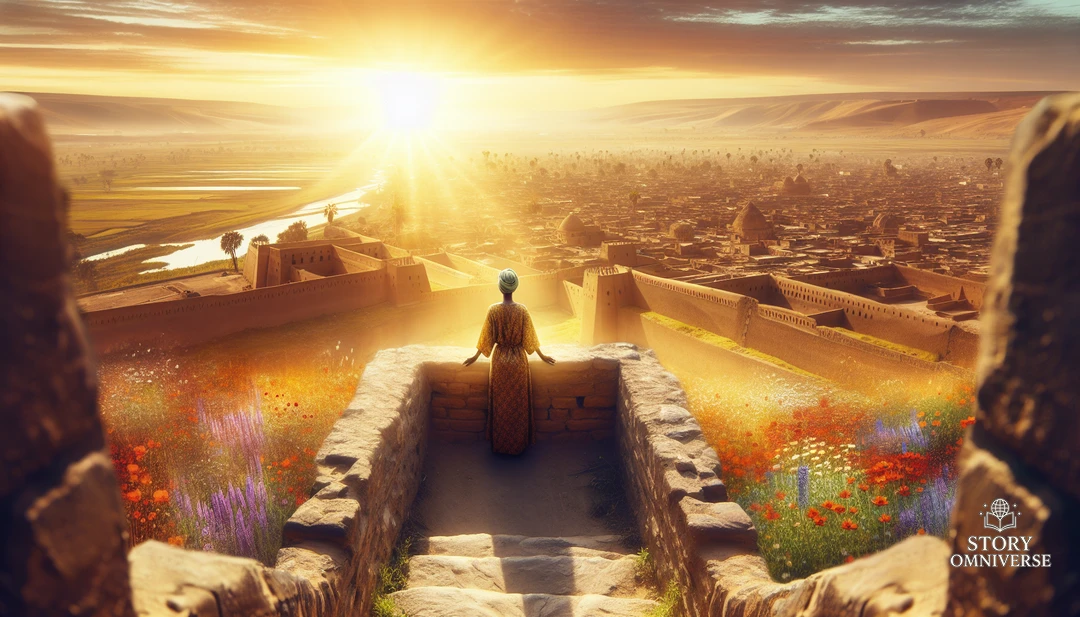
As another year dawned, Livia stood atop the city’s high walls. Below, farmers tended green fields and children played among wild poppies. The sky was clear, the air sweet with spring.
Tarquinii was forever changed. The Romans still watched, but dared not attack again, at least not yet. Other Etruscan cities looked to Tarquinii as a symbol of resistance and renewal.
Livia’s legacy grew. She helped forge a fragile network of alliances across Etruria. The city prospered through trade, carefully balancing old customs with the new realities.
Tiberius remained at her side, bridging the gap between two worlds. They helped foster a cautious peace, always vigilant but never forgetting what had been won—and lost.
On the festival of Ceres, Livia led the procession, garlands in her hair, a living symbol of Etruscan endurance. She stood before the altar and spoke:
“We are Etruscans—children of this land and keepers of its memory. Rome may be mighty, but our hearts are our own.”
The people cheered, their voices rising under the broad Etruscan sky. As the sun set, Livia gazed at her city, knowing that whatever came, Tarquinii’s spirit would never be conquered.

0 Comments