
Clearbrook
The Valley of Springs and Civic Voices
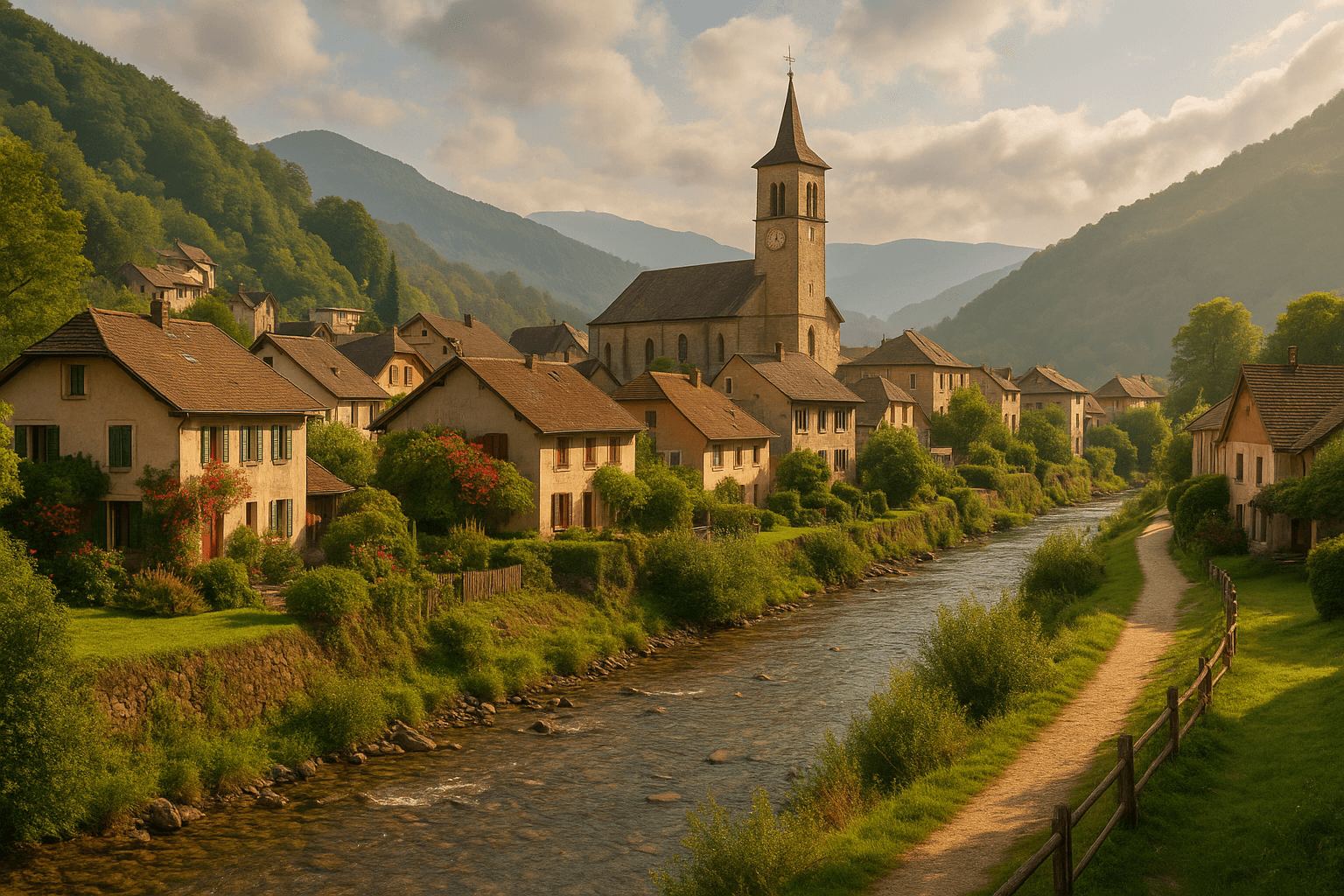
Nestled in a lush highland valley, Clearbrook’s identity flows directly from its pristine mountain spring water. The streams, cold and crystal-clear, thread through tidy streets lined with ivy-clad buildings and sunlit plazas. Every household, from the oldest stone cottages to the modern co-ops, draws from the same network of channels that feed the heart of the town — the central Spring Plaza, where a public fountain overflows year-round.
Life here moves with a deliberate calm. The 5,400 residents value their quietude, but they also embrace a deeply participatory civic culture. On any given evening, the Riverstone Hall hosts open forums where townsfolk — young apprentices, retired artisans, farmers from the valley’s edge — gather to debate policy, propose projects, and air grievances. These forums often carry into the night, fueled by steaming mugs of spruce honey tea and slices of trout pie.
Tradition runs deep, especially in the Spring Oath Ceremony, a solemn event each year when new residents pledge to uphold the town’s principles of honesty, stewardship, and collective care. The ritual takes place on the first full moon of spring, lit by floating candles set adrift along the waterways.
Clearbrook is also home to the Riverstone Debate Nights, less formal but equally spirited affairs where disagreements are as likely to be resolved with eloquence as with stubborn endurance. It’s here that the younger generation — idealists, reformists, and those curious about the outside world — often make their mark.
Folklore seeps into daily life. The Rivermaid of Clearbrook, a spirit said to appear to those who speak truth in public, remains a cherished local legend. Her carved likeness can be found on fountainheads, doorframes, and even etched into council benches as a reminder of the town’s moral compass.
While generally open-hearted, Clearbrook guards its independence fiercely. Headmistress Adra Wynn, both the town’s educational leader and its de facto political voice, walks a fine line with the Serious Crimes Unit. She acknowledges their value in addressing crimes that might ripple through the region, yet she is cautious of ceding too much authority to outsiders.
Most residents, especially younger reformists, welcome the SCU’s influence as a safeguard against corruption or outside exploitation. The older generation, however, remains protective of local ways and wary of losing their say in matters that touch the town’s core identity.
Clearbrook’s days begin with the sound of rushing water and end with lanterns glowing in windows as night settles over the valley — a rhythm as steady and purposeful as the town itself.